Medically reviewed by Dr Sin Yong · Last reviewed · 6 min read
Published 6 October 2026 · Reviewed by Dr Sin Yong
A keloid is a raised, firm scar that grows beyond the boundary of the original wound into skin that was never injured, caused by collagen production that continues after healing should have finished. Keloids are more common in Chinese, Malay, Indian and African skin and in people with a family history, and favour the earlobes, chest, shoulders, upper back and jawline. They can itch or hurt, do not usually regress on their own and tend to recur after excision alone.
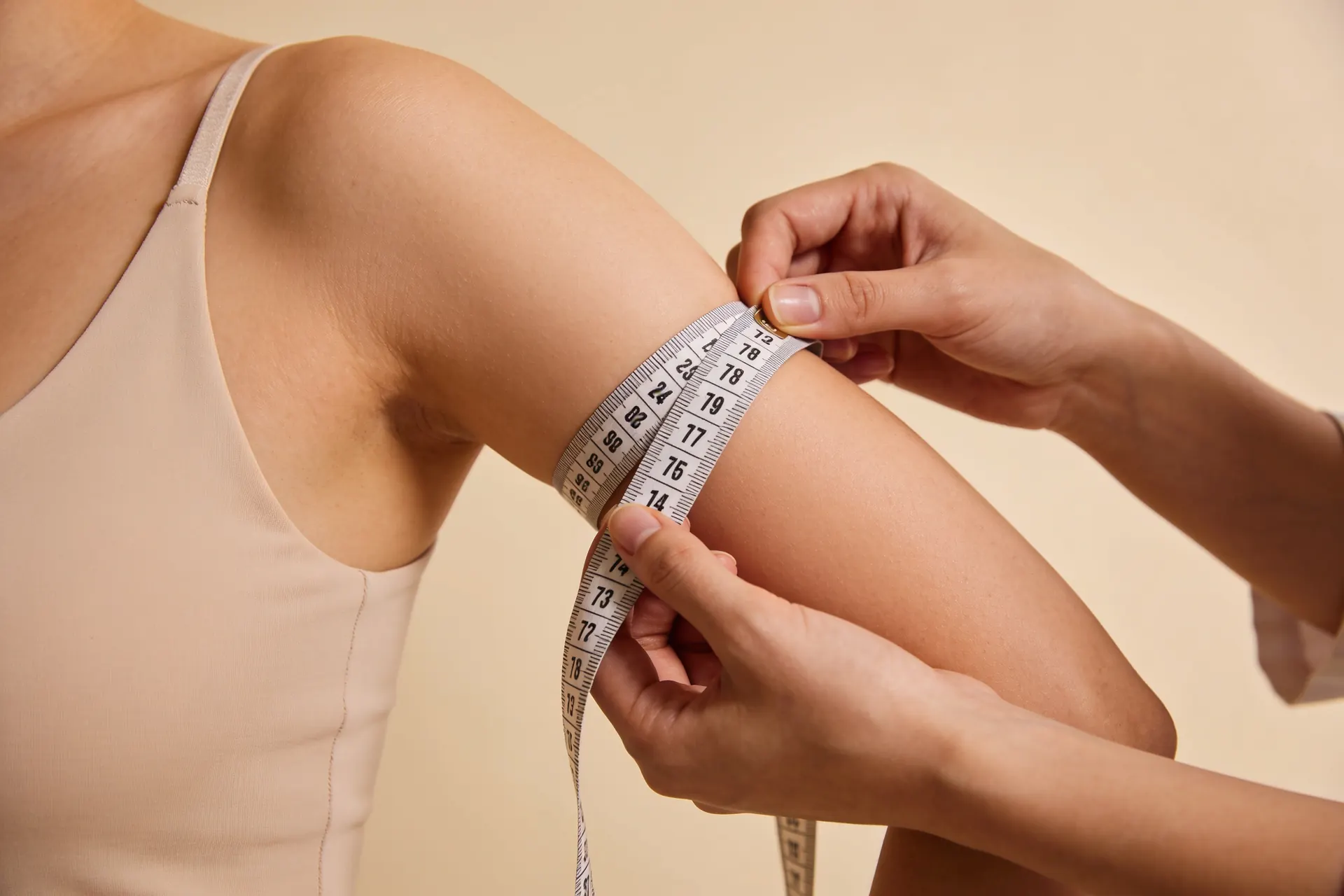
Illustrative image, not a patient. Shoulders, chest and earlobes are high-tension sites where keloids favour.
Key facts
Defining feature
Grows beyond the edge of the original wound; a hypertrophic scar stays within it
Mechanism
A prolonged wound-healing response with excess deposition of type I and type III collagen
Who is prone
Strong genetic loading; substantially more common in Chinese, Malay, Indian and African skin
Common sites
Earlobes after piercing, upper chest, shoulders, upper back and jawline; also surgical scars, burns and acne
Management
Intralesional medical therapy first, with silicone, pressure, cryotherapy or laser as adjuncts; surgery only with adjuvant treatment
What a keloid is, and why it keeps growing
Normal wound healing ends with a remodelling phase in which the collagen laid down during repair is reorganised and the scar settles back towards the level of the surrounding skin. In a keloid that phase never concludes. Fibroblasts continue to deposit type I and type III collagen well past the point at which healing should have finished, and the lesion expands outward into skin that was never injured. A small piercing can produce a lesion many times the size of the original hole.
Genetic susceptibility is the major factor, which is why keloids run in families, and mechanical tension decides the site: the chest, shoulders, upper back, jawline and earlobes lead the statistics. Triggers include piercings, acne, minor surgery, burns, BCG vaccination and sometimes an injury too trivial to remember. Active keloids are biologically busy tissue, which is why they itch, ache or sting, and for many patients those symptoms rather than the appearance prompt the visit.
How keloids are managed in aesthetic medicine
Management begins by confirming that the lesion is a keloid, because the plan differs from that for a hypertrophic scar. First-line treatment is intralesional medical therapy: medicine placed into the scar to soften and flatten it and to settle itch and tenderness, given as a course and monitored, since it can thin or lighten nearby skin. Silicone gel or sheeting and pressure, such as pressure earrings after an earlobe keloid, are the base of every algorithm for fresh or early scars.
Adjuncts are chosen by site, by how old the lesion is and by how it has responded before: cryotherapy to reduce bulk, and laser directed at the redness and surface texture rather than at flattening a bulky lesion on its own. Plans are usually combined and staged over time, and ongoing review is part of them. The keloid treatment page sets out the options and what each cannot do.
“A keloid grows past the edge of the wound that caused it. A hypertrophic scar does not. That single boundary decides almost everything that follows.”
Dr Sin YongOn distinguishing the two
What a keloid is often confused with
A hypertrophic scar is also raised, red and sometimes itchy, which is why the two are mistaken for one another. The difference is visible at the edge: a hypertrophic scar respects the outline of the wound that produced it and commonly flattens over months to a couple of years, while a keloid spreads beyond that outline and characteristically does not regress. The guide to keloid vs hypertrophic scar explains why that boundary changes the whole plan.
Raised scars from acne on the jaw and chest are often assessed alongside the atrophic, dented acne scar types that sit on the same face, since the two directions of scarring call for different treatment. A lump that appeared without any injury, grows quickly, bleeds or ulcerates should be examined before it is treated as a keloid, because other skin growths can look similar and a biopsy is occasionally needed.
When cutting it out is not the answer
Excision on its own answers a keloid with the one thing it responds to most reliably: a fresh wound in keloid-forming skin. Recurrence after solo excision is the documented norm, and the recurrent keloid is frequently larger than the one removed. Where surgery has a role it is combined with immediate adjuvant treatment, and it is referred to a plastic surgery specialist; anyone offering straightforward removal without discussing what follows is not describing the problem accurately.
A personal or family history of keloids also matters before any procedure that breaks the skin, from a piercing to a laser. It is asked about before treatments elsewhere on this site, including energy-based lifting, and it does not rule everything out, but it changes what is advisable and how a procedure is planned. Waiting for a keloid to fade, scar oils on an established lesion, and home remedies that add inflammation to tissue that answers inflammation with growth are not strategies.
Frequently Asked Questions
A keloid extends beyond the boundary of the original wound into surrounding normal skin and does not usually regress on its own. A hypertrophic scar is raised but stays within the wound margins and often flattens over months to a couple of years. The distinction is made on examination and decides the plan.
A keloid is an abnormal, prolonged wound-healing response in which collagen production continues after repair should have finished. Genetic susceptibility is the major factor, so keloids often run in families, and they are substantially more common in Chinese, Malay, Indian and African skin.
Excision alone has a high recurrence rate, and the recurrent keloid is frequently larger than the original. Where surgery is appropriate it is combined with adjuvant treatment and referred to a plastic surgery specialist. Intralesional medical therapy with silicone, pressure, cryotherapy or laser is the usual starting point.
Not on its own. Laser is an adjunct that can reduce the redness and improve the surface texture of an active keloid, but it does not flatten a bulky lesion by itself. It is combined with intralesional medical therapy and other measures chosen for the site and the age of the keloid.
The Most Current Algorithms for the Treatment and Prevention of Hypertrophic Scars and Keloids: A 2020 Update of the Algorithms Published 10 Years Ago. Plastic and Reconstructive Surgery (PubMed), 2022. source
Keloid and hypertrophic scar. DermNet, 2024. source