Key facts
- What HIFU does
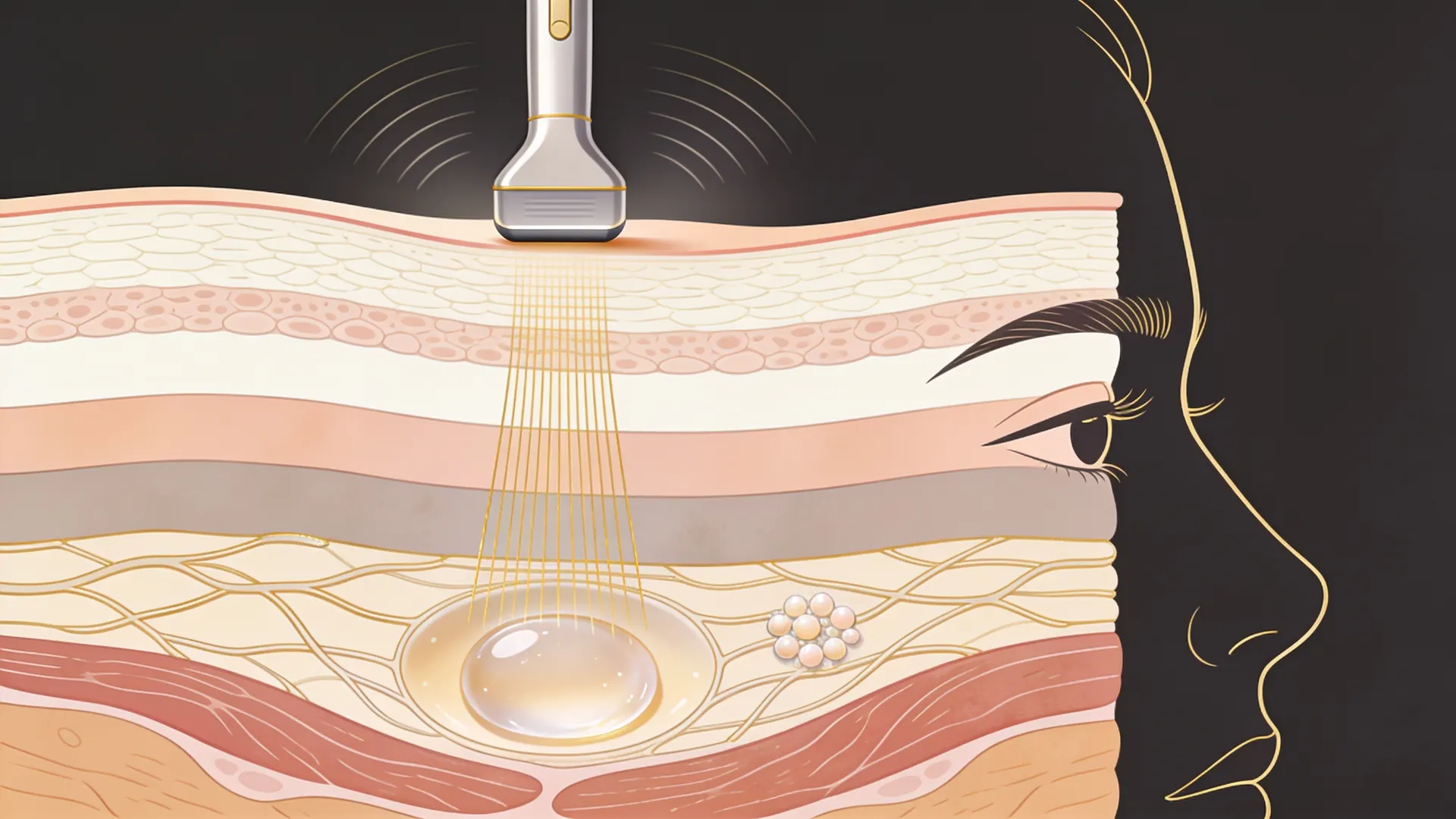
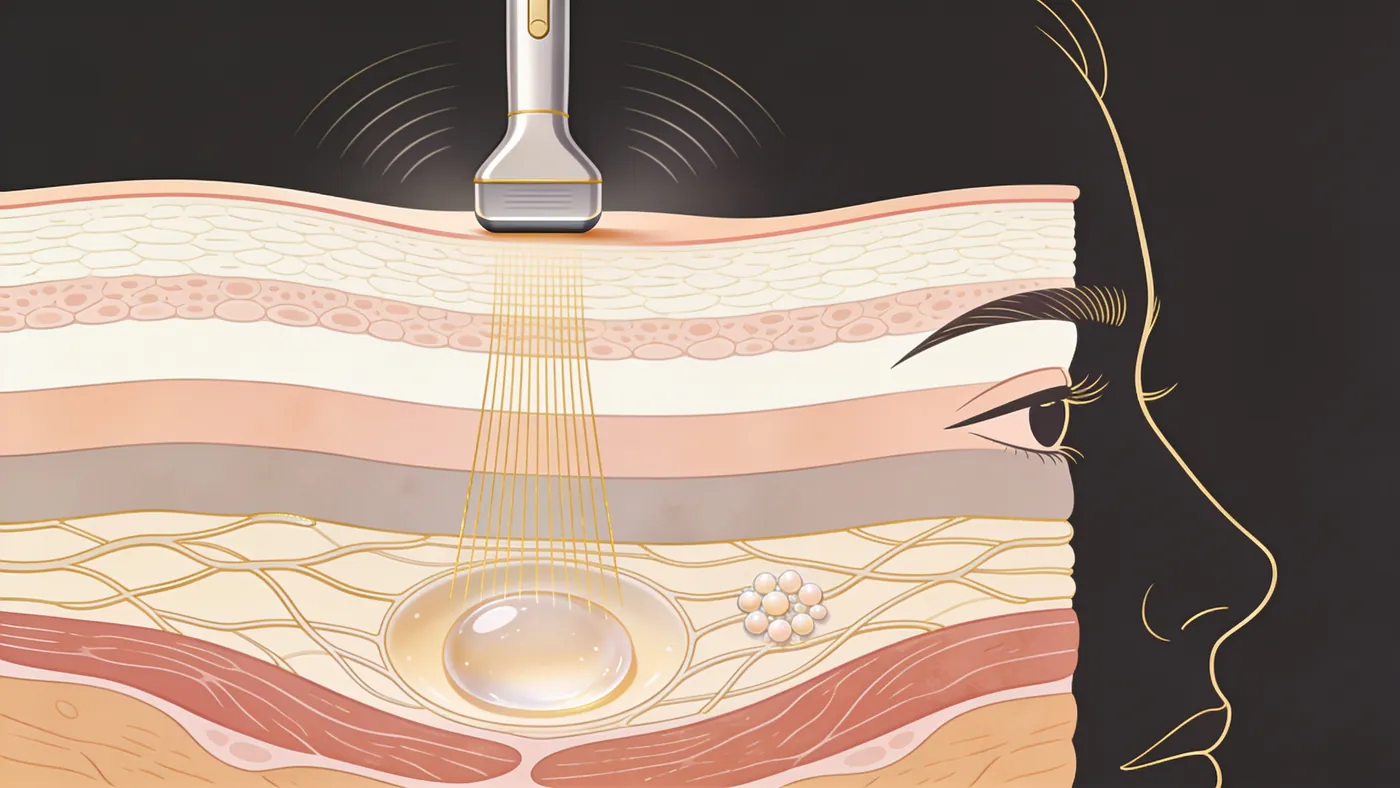
- Converges ultrasound to points of roughly 60–70 °C at 1.5, 3.0 or 4.5 mm; collagen contracts and remodels
- Volume loss
- Not replaced: a hollow cheek or temple sags for a different reason, and heat can deepen it
- Heavy skin excess
- Not removed: contraction has a ceiling, and redundant skin is surgical territory
- Fat pads
- Not cleared: a full submental or jowl fat pad is heaviness, not laxity
- Fine lines and pigment
- Not treated: these are dermal surface and melanin problems, not SMAS problems
- Used here
- Ultraformer MPT and Ultherapy Prime, mapped by Dr Sin Yong after palpation of each zone
Can HIFU replace lost facial volume?
No. HIFU tightens tissue that is lax; it does not add anything, so it cannot do what filler, a biostimulator or the body's own fat does for a face that has hollowed. A deflated temple or mid-cheek sags because the scaffold beneath it has shrunk, and heating the SMAS above an empty compartment does not refill it. Lifting tissue that has lost volume does not replace the volume, and in a thin face energy placed into subcutaneous fat can read as further hollowing.
What is assessed instead is the volume itself. Volume restoration separates true volume loss from tissue descent before any product is chosen, and in a slim face the VF Lift – Vertical Facelift, which runs on Volnewmer monopolar radiofrequency rather than focused ultrasound, is considered because its protocol includes a restore arm for hollowing rather than tightening alone. Which applies is decided by palpating what is missing against what has moved.
Can HIFU remove heavy or redundant skin?
No. Tightening by focused ultrasound is a contraction of tissue that is already there, so its ceiling is set by how much excess exists. A heavy lower face with a great deal of redundant skin, deep jowls that fold over the jawline, or a neck with loose bands and surplus skin is more tissue than any energy device contracts, and part of an honest assessment is saying so.
Where there is a defined excess with skin that still has elasticity, a thread lift repositions the mobile tissue mechanically; where the excess is beyond that, the honest answer is referral to a plastic surgery specialist, because a surgical facelift releases and re-suspends the SMAS and removes skin, which focused ultrasound cannot do. Someone expecting a surgical-level change from HIFU is told so before any plan is written.
“Lifting tissue that has lost volume does not replace the volume. Ultrasound can tighten what is there; it cannot put back what has gone.”
Dr Sin YongOn the limit of focused ultrasound in a hollow face
Does HIFU get rid of a double chin or jowl fat?
Not when the heaviness is fat. A full submental pad or a jowl driven by fat is a volume problem in the opposite direction, and heating the SMAS above it tightens the envelope without emptying it. Body cartridges on the Ultraformer MPT do reach deeper fat, but a face that is heavy rather than loose needs the fat addressed on its own terms, and more lines of focused ultrasound are not the answer.
The examination palpates skin and fat thickness over each zone precisely to separate the two. Where fullness and laxity coexist, the VF Lift – Vertical Facelift is planned to lift where there is laxity and address excess puffiness in the same protocol; where a fat pad is the whole story, fat-directed options are assessed. HIFU is kept for the laxity component, if there is one.
What HIFU cannot do, and what is assessed instead| Concern | Why HIFU is not the answer | What is assessed instead |
|---|
| Hollow cheeks or temples | Heat adds nothing; in a thin face it can deepen the hollow | Volume restoration; VF Lift – Vertical Facelift with its restore arm |
| Heavy skin excess and deep jowls | Contraction has a ceiling set by how much excess exists | Thread lift where elastic; otherwise a plastic surgery specialist |
| Full double chin or fatty jowl | Heaviness is fat, not laxity | Fat-directed options; VF Lift where laxity and fullness coexist |
| Fine lines and crepey skin | Dermal and epidermal problems, not SMAS problems | Resurfacing, RF microneedling, boosters, Time Freeze Laser LCLR® |
| Movement wrinkles | Lines made by muscle do not respond to tightening | Botulinum toxin |
| Pigment and redness | Ultrasound is absorbed by neither melanin nor blood | Diagnosis first; pigment or vessel-directed treatment |
Can HIFU treat fine lines and crepey skin?
Only indirectly, and not well. Fine lines, crepiness and surface roughness are dermal and epidermal problems; the SMAS-depth cartridges that give HIFU its lifting effect do nothing for them, and the shallow 1.5 mm cartridge firms the dermis rather than resurfacing it. Movement lines in the forehead and around the eyes belong to muscle and answer to botulinum toxin, and a line etched at rest needs dermal remodelling.
Skin quality is assessed on its own: fractional resurfacing, RF microneedling, skin boosters or biostimulation for the dermis, and the Time Freeze Laser LCLR® protocol where laser lifting with surface work is indicated. The HIFU page describes the cartridge depths and what each layer can and cannot be asked to do.
Does HIFU improve pigmentation or redness?
No. Pigment is melanin and redness is blood; focused ultrasound is absorbed by neither, so it has no action on sun spots, melasma, post-inflammatory marks or vessels. A face treated with HIFU does not become more even in tone, and clinics that bundle a brightening claim into a lifting treatment are describing something else that was done at the same time.
Pigment and redness are diagnosed and treated separately, and the diagnosis matters more than the device. Which brown it is decides whether a picosecond laser, low-fluence toning or a conservative melasma plan is appropriate, and redness goes to inflammation-directed or vessel-directed treatment. Dr Sin Yong assesses laxity, volume, fat, skin quality and pigment as separate questions, states which mechanism was chosen and why the others were set aside, and sets the fee out in writing afterwards, as how fees are quoted describes.