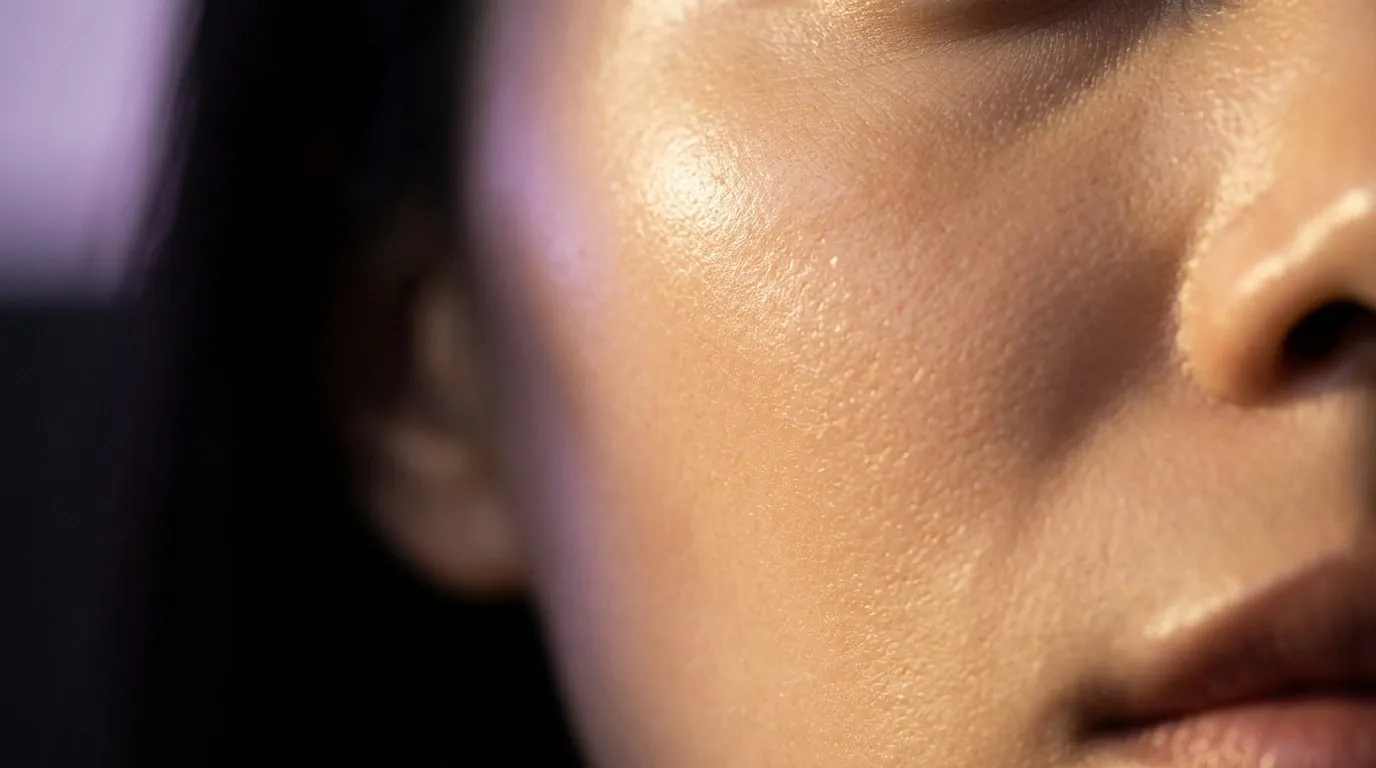
A skin tightening treatment uses controlled heat to make existing collagen contract and to prompt new collagen to form, firming skin that has begun to loosen. In Singapore the main options are focused ultrasound (HIFU), monopolar radiofrequency, RF microneedling and laser. Each works at a different depth, so the right choice depends on where the laxity sits.
- Why Does Skin Become Lax?
- Technologies for Skin Tightening in Singapore
- Body Skin Tightening
- Setting Realistic Expectations
- Dr Sin Yong explains
- What is an RF treatment, and how does a radio frequency facial differ?
- Neck tightening: what can be treated without surgery
- Eye lifting treatment: what can and cannot be lifted
- Skin tightening or facial lifting: what is the difference?
- Body skin tightening treatment: tummy, arms and thighs
- Frequently Asked Questions

- What causes laxity
- Loss of skin collagen and elastin, weakening of deeper support and volume loss, often together
- HIFU
- Focused ultrasound at a set depth, reaching the SMAS at approximately 4.5 mm
- VF Lift – Vertical Facelift
- Volnewmer monopolar radiofrequency heating the dermis and subcutaneous layer; it does not use focused ultrasound
- Time Freeze Laser LCLR®
- Scanning laser protocol for diffuse tightening where the lower face carries compact fat as well as laxity
- 4K Body Lift
- Radiofrequency only, for the abdomen, arms, thighs and inner knees
- Limits
- Marked skin excess, such as after major weight loss, is referred for a surgical opinion
Why Does Skin Become Lax?
Skin laxity results from the gradual loss of collagen and elastin — the structural proteins that maintain firmness and resilience. Skin collagen content falls steadily through adult life and is lower in women than in men at every age. Over decades the cumulative effect becomes visible: skin becomes looser and begins to sag. Chronic UV exposure (significant in Singapore), rapid weight loss, smoking and hormonal changes accelerate the process.
Related: Time Freeze Laser LCLR® vs Ultherapy, Thermage and liposuction — what each does, what it cannot do, and why Dr Sin Yong chooses VF Lift for lean faces and Time Freeze for puffy ones.
Technologies for Skin Tightening in Singapore
HIFU — Focused ultrasound to the SMAS layer. Heat at a focal depth causes collagen contraction followed by gradual neocollagenesis. Suited to laxity at the SMAS level; any change develops gradually as new collagen forms.
Monopolar Radiofrequency (Volnewmer) — Capacitive RF energy heats the deep dermis and superficial fat uniformly. Better for surface skin quality improvement and early laxity than for deep structural lifting.
RF Microneedling — Combines microneedling with RF delivered through needles into the deep dermis. Used for texture, enlarged pores, shallow scarring and early dermal laxity.
Laser Skin Tightening (Time Freeze Laser LCLR®) — A scanning laser protocol that delivers thermal energy across a broad zone for diffuse, gradual tightening, used where the lower face carries compact fat as well as laxity.
VF Lift – Vertical Facelift — Dr Sin Yong's protocol built on Volnewmer monopolar radiofrequency, which heats the dermis and subcutaneous layer volumetrically rather than at a focal point. It does not use focused ultrasound.
“Significant skin excess — particularly after major weight loss — typically requires surgical body contouring for meaningful improvement.”
Dr Sin YongOn the limits of non-surgical skin tightening
“Loose skin and descended fat pads look identical in a mirror.”
Dr Sin YongOn tightening versus lifting · from his Instagram explainer series
Body Skin Tightening
For the body — abdomen, arms, thighs, inner knees — Dr Sin Yong's 4K Body Lift uses radiofrequency alone, delivered zone by zone, to heat the subcutaneous layer and the overlying skin. It is not liposuction and does not replace surgery where there is a large volume of fat or marked loose skin.
Setting Realistic Expectations
Non-surgical skin tightening is suited to early to moderate laxity. Significant skin excess — particularly after major weight loss — typically requires surgical body contouring for meaningful improvement. Dr Sin Yong provides an honest assessment of what is achievable non-surgically at consultation.
Ready to Book a Consultation?
All treatments performed personally by Dr Sin Yong at Orchard Road, Singapore.
WhatsApp +65 8023 7170Dr Sin Yong explains
Loose skin and descended fat pads look the same in a mirror, but they are not approached the same way. A short video from Dr Sin Yong’s Instagram, with captions.
What is an RF treatment, and how does a radio frequency facial differ?
An RF treatment uses radiofrequency current to heat tissue. The skin's resistance to the current generates heat, which makes existing collagen contract and prompts fibroblasts to lay down new collagen over the following months. How deep that heat goes, and in what pattern, depends on how the energy is delivered.

Monopolar radiofrequency, the principle behind Volnewmer and therefore VF Lift – Vertical Facelift, passes current between a treatment tip and a return pad, heating the dermis and subcutaneous layer volumetrically. Bipolar and multipolar devices pass current between electrodes on the same tip, so the heating is shallower. RF microneedling delivers the energy at the tips of fine needles, placing heat at a chosen depth in the dermis while largely sparing the surface.
A radio frequency facial at a spa or with a home device generally works at lower energy and more superficially. It can feel warming and pleasant, but it is not equivalent to a medical monopolar treatment, and the two should not be compared by name alone. Which form of RF suits a face, if any, depends on whether the laxity sits in the dermis, the subcutaneous layer or deeper.
Neck tightening: what can be treated without surgery
Neck tightening without surgery works where the problem is skin quality and early laxity rather than a large excess of skin. The neck is assessed in parts, because several different changes produce an ageing neck and each calls for a different approach.
Crepey, thin skin and fine horizontal lines respond to treatments that act on the dermis, such as monopolar radiofrequency or RF microneedling. Early laxity beneath the jaw, with some loss of definition, may suit heating at depth with HIFU or radiofrequency. Vertical platysmal bands are muscular and are addressed with botulinum toxin rather than heat. Fullness under the chin may be fat rather than loose skin, which changes the plan entirely.
Where the neck has marked loose skin, deep banding at rest or a heavy lower face with jowls, energy-based treatment is unlikely to deliver the change people are hoping for, and referral for a surgical opinion on a neck lift is discussed openly. Neck skin is thinner than facial skin, so energy settings there are chosen conservatively.
Eye lifting treatment: what can and cannot be lifted
An eye lifting treatment can address mild hooding and crepey skin around the eyes, but it cannot remove excess eyelid skin or herniated fat. What looks like a drooping eye usually has one of four causes: a lowered brow, loose upper-lid skin, crepey lower-lid skin, or fat bulging forward through a weakened orbital septum.
A brow that has descended can sometimes be raised slightly by relaxing the muscles that pull it down with botulinum toxin, and energy-based tightening of the forehead and temples may help support it. Crepey lid skin responds to treatments acting on the dermis, with settings chosen for the thinnest skin on the face and eye protection throughout. A tear trough hollow beneath the eye is a volume problem rather than laxity and is assessed separately.
Upper-lid skin that rests on the lashes, and true eye bags from herniated orbital fat, are structural. No energy device removes them, and the appropriate route is referral for assessment for blepharoplasty. Saying so at consultation is part of planning honestly.

| Option | What it does | What it cannot do | Typical recovery | Who it tends to suit |
|---|---|---|---|---|
| HIFU (focused ultrasound) | Focuses ultrasound to points at a set depth, reaching the SMAS at approximately 4.5 mm, causing collagen contraction and gradual remodelling | Does not replace lost volume; cannot remove marked excess skin | Redness and tenderness; transient swelling or numbness can occur | Laxity at the SMAS level in the lower face and jawline, with skin that still has some elasticity |
| VF Lift – Vertical Facelift (Volnewmer monopolar radiofrequency) | Heats the dermis and subcutaneous layer volumetrically rather than at a focal point; it does not use focused ultrasound | Does not replace lost volume; cannot remove marked excess skin | Transient redness and warmth | Laxity and declining skin quality in the dermis and subcutaneous layer of the face, and selected body areas |
| Time Freeze Laser LCLR® | A scanning laser protocol delivering thermal energy across a broad zone for diffuse, gradual tightening | Does not replace lost volume; not a substitute for surgery where skin excess is marked | Transient redness and warmth; specifics are discussed at consultation | A lower face carrying compact fat as well as laxity |
| RF microneedling | Delivers radiofrequency at the tips of fine needles, placing heat at a chosen depth in the dermis | Does not reach the SMAS; deeper laxity belongs to other approaches | Redness, swelling and pinpoint needle marks while the skin settles | Texture, enlarged pores, shallow scarring and early dermal laxity |
| 4K Body Lift (radiofrequency only) | Heats the subcutaneous layer and the overlying skin, zone by zone, on the body | It is not liposuction; cannot remove a large volume of fat or marked loose skin | Transient redness and warmth | Mild to moderate laxity of the abdomen, arms, thighs or inner knees |
| Surgery (facelift, neck lift, blepharoplasty, body contouring) | Removes excess skin and repositions deeper tissue | Not a non-surgical option; involves incisions, anaesthesia and scars | The longest recovery of these options, set out by the operating team | Marked skin excess, such as after major weight loss, or heavy jowls and neck; referred for a surgical opinion |
- Skin Whitening Supplements: The Evidence — Glutathione pills, tomato carotenoids and tranexamic acid tablets: what the evidence shows, how HSA regulates supplement…
- Skin Tag Removal Singapore: Do Creams Work? — Skin tag removal cream: why creams lack evidence, the burns and scarring reported, and what HSA does and does not approv…
- Skin Rejuvenation Singapore: What It Covers — Skin rejuvenation covers four problems: tone, texture, laxity and volume. How each is matched to a treatment category, a…
- The influence of age and sex on skin thickness, skin collagen and density — British Journal of Dermatology (PubMed), 1975.
- Ultrasound tightening of facial and neck skin: a rater-blinded prospective cohort study — Journal of the American Academy of Dermatology (PubMed), 2010.
- Update on Tissue Tightening — Journal of Clinical and Aesthetic Dermatology, 2010.
Medically reviewed by Dr Sin Yong · Updated 5 October 2026
Skin tightening or facial lifting: what is the difference?
Skin tightening firms the skin itself; facial lifting aims to move tissue that has descended back towards where it sat. The two overlap, but they answer different findings. Tightening works on collagen in the dermis, so it suits skin that has become thinner, crepey or slightly loose. Lifting concerns the deeper support beneath it: the SMAS, the fat compartments and the ligaments that hold the cheeks, jawline and brow in place.
Non-surgical facial lifting uses energy placed deeper or across a broader volume of tissue. HIFU reaches the SMAS at a set depth, VF Lift – Vertical Facelift heats the dermis and subcutaneous layer volumetrically with Volnewmer monopolar radiofrequency, and Time Freeze Laser LCLR® is used where the lower face carries compact fat as well as laxity. Where descent is driven by volume loss, filler or a collagen stimulator may belong in the plan instead.
When tissue has descended a long way, or there is marked excess skin, no device lifts it back; a surgical facelift repositions and removes tissue, and that opinion is referred to a plastic surgery specialist. Most faces show a mixture, which is why the assessment separates skin quality from support before anything is recommended.
Body skin tightening treatment: tummy, arms and thighs
Body skin tightening treats loose skin on the tummy, upper arms, thighs and inner knees, and each area is assessed for two things at once: how much the skin has lost its recoil, and how much fat sits beneath it. The proportions decide the plan, because reducing fat under skin that has already lost its recoil can leave the outline unchanged and the skin looser.
On the tummy, post-pregnancy laxity often comes with fat, and abdominal wall separation (diastasis) is checked separately because it is a muscle problem rather than a skin one. The upper arm may carry volume, laxity or both. On the inner and outer thighs, skin quality frequently sets the ceiling for what can change.
Dr Sin Yong's 4K Body Lift is a radiofrequency-only protocol on the Secret Duo platform, without EMS. Energy is delivered zone by zone to the fat compartments and the overlying skin, with depth set to the patient rather than to a preset. It suits mild to moderate laxity. Marked loose skin, particularly after major weight loss, is referred for a surgical opinion on body contouring.
Frequently Asked Questions
It depends on the depth of the laxity. HIFU heats the SMAS at a focal depth; VF Lift – Vertical Facelift uses Volnewmer monopolar radiofrequency in the dermis and subcutaneous layer, without focused ultrasound; Time Freeze Laser LCLR® is a laser protocol for the lower face. For body skin tightening, the 4K Body Lift RF protocol addresses residual laxity and fat simultaneously. The right choice depends on the area and the degree of laxity found at assessment.
It is not fixed in advance. The number and spacing of treatments depend on the device, the area and what the assessment finds, and the plan is set out individually at consultation.
Treatment does not stop ageing. Collagen remodelling continues for a period after treatment and the face goes on ageing afterwards, so any further treatment is planned individually rather than on a fixed schedule.
No. Eyebags are caused by orbital fat herniation — a structural issue that tightening does not correct; where it is the cause, referral for surgical assessment for blepharoplasty is discussed. Non-surgical skin tightening cannot eliminate true eyebags.
Most people feel heat, and with focused ultrasound brief, deep pulses that can be uncomfortable over bony areas. Comfort is managed with cooling, by adjusting energy and, where appropriate, with topical anaesthetic or pain relief beforehand. Tolerance differs between individuals and between devices, and it is discussed before treatment.
HIFU focuses ultrasound energy to points at a set depth, reaching the SMAS at approximately 4.5 mm, so heat is concentrated in small zones. Monopolar radiofrequency heats a broader, shallower volume of the dermis and subcutaneous layer evenly. They act at different depths, so they are not interchangeable, and the assessment decides which layer needs treatment.
No. VF Lift – Vertical Facelift is built on Volnewmer monopolar radiofrequency and does not use focused ultrasound. Whether any other treatment is planned alongside it is decided at assessment.
Yes. The abdomen, arms, thighs and inner knees can be treated with radiofrequency, and Dr Sin Yong's 4K Body Lift uses radiofrequency alone. It suits mild to moderate laxity. Significant loose skin, particularly after major weight loss, generally needs surgical body contouring, and referral is discussed where that is the case.
It depends on the treatment. After HIFU or monopolar radiofrequency most people have some redness or tenderness and return to normal activities, though transient swelling, bruising or numbness can occur. RF microneedling leaves redness and pinpoint marks while the skin settles. Recovery for each option is explained before treatment.
Treatment is deferred in pregnancy and where there is active infection or inflammation in the area. Metal implants and electronic devices such as pacemakers matter for radiofrequency, and recent filler in the treatment plane, a tendency to keloid scarring and some medical conditions are assessed individually. Marked skin excess is better served by a surgical opinion.
There is no set age. The decision follows what the skin shows rather than a birthday: early dermal laxity, crepiness or a softening jawline can appear in some people in their thirties and in others much later, depending on genetics, sun exposure, weight change and smoking. Early laxity is generally more straightforward to address than marked excess skin, but treatment is not needed simply because of age.
Often, because they address different things: energy-based tightening works on collagen and laxity, while filler replaces lost volume. They are planned in sequence rather than at random, and heating over filler recently placed in the same plane is assessed individually. The order and spacing are set out at consultation.