Key facts
- Nerve weakness
- Heat near the marginal mandibular branch along the jaw or the temporal branch above the brow; numbness, tingling or an uneven smile
- Fat loss
- The 4.5 mm focus landing in subcutaneous fat where tissue above bone is thin; hollowing of the cheek or temple
- Burns and welts
- Poor transducer coupling, a cartridge too superficial for the skin, or stacked passes over the same line
- Bone pain
- Focal heat reaching the periosteum over the jawline, cheekbone or forehead
- Higher risk
- Lean or volume-depleted faces, preset plans without palpation, treatment over nerve courses or the orbital rim
- Needs prompt review
- Any change in facial movement, numbness that persists, a welt that does not flatten, marked or one-sided swelling
How does HIFU cause nerve weakness, and what does it look like?
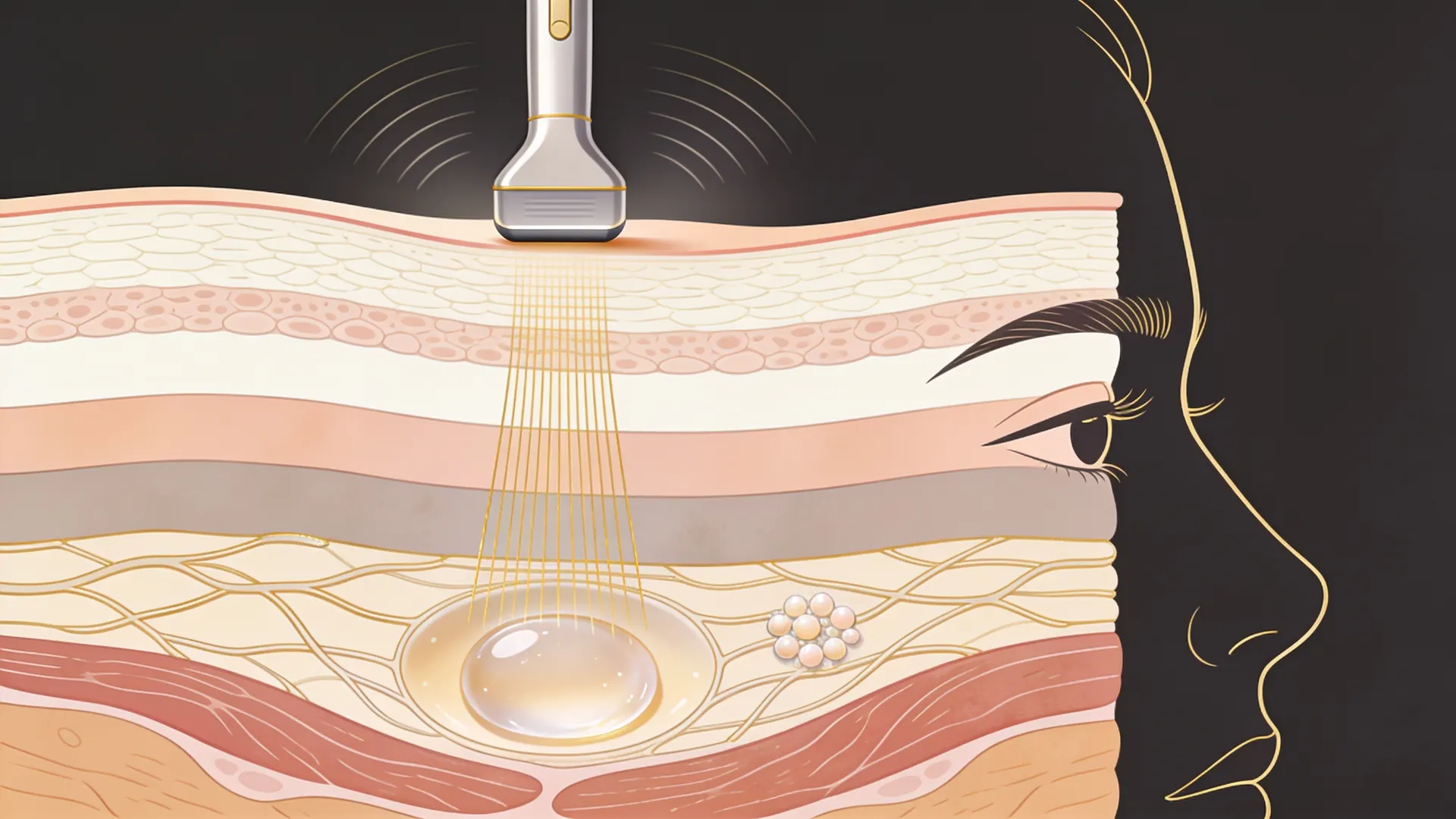
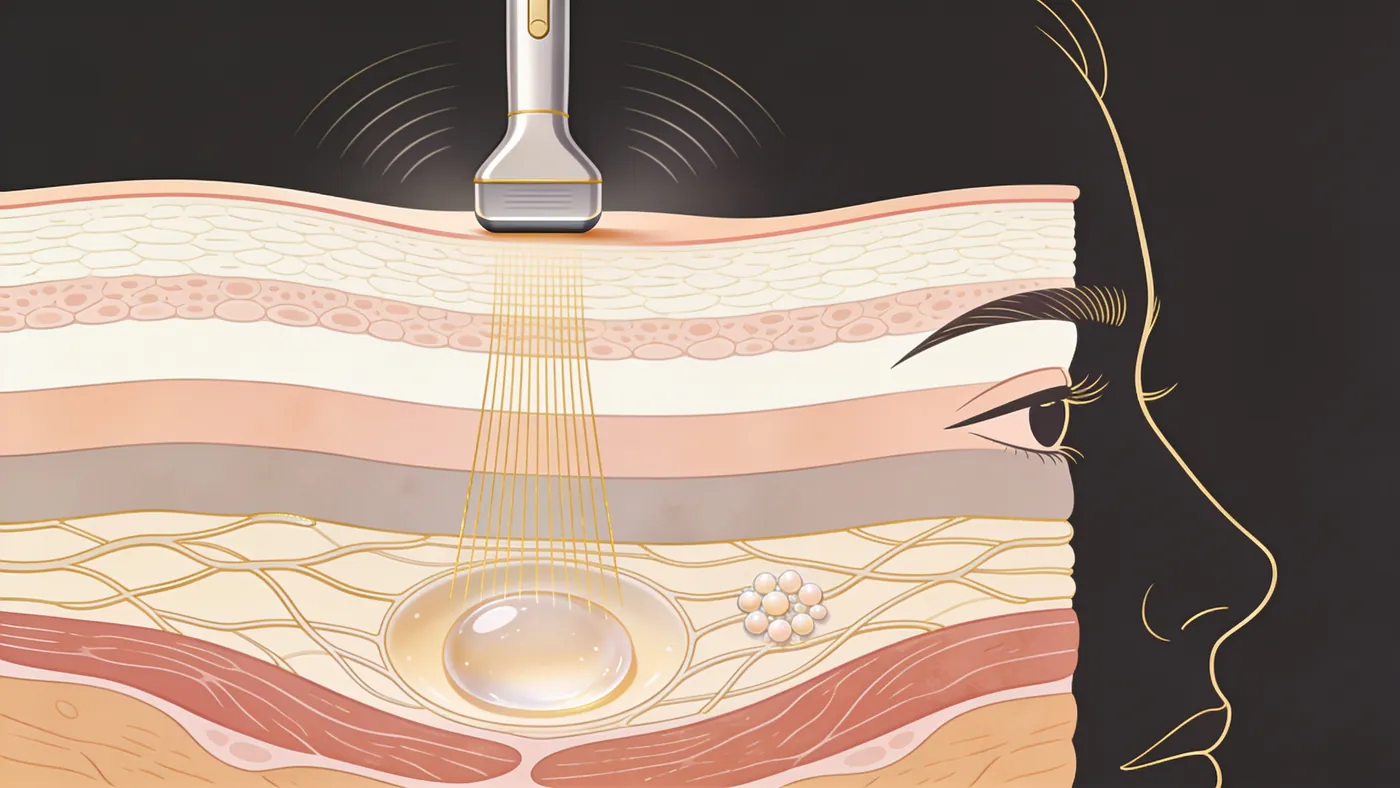
HIFU causes nerve weakness when a focal heating point lands close enough to a nerve branch to irritate it. HIFU converges ultrasound to a point of roughly 60 to 70 degrees Celsius at a set depth, and two branches of the facial nerve run near those depths in thin tissue: the marginal mandibular branch along the lower border of the jaw, and the temporal branch above the brow. Heat near either can produce numbness, tingling or a temporary weakness of the muscle it supplies, so the corner of the mouth or the brow on that side moves less.
In published case series, nerve-related symptoms after microfocused ultrasound have been described as temporary, with function returning as the irritation settles, but no timeline can be promised for an individual. Any change in how the mouth or brow moves after HIFU warrants prompt review rather than waiting to see, because the first step is to confirm what has happened and to document it. The course of the marginal mandibular nerve is one of the zones avoided at this practice, along with the thyroid and the orbital rim.
Why does HIFU cause fat loss, and who is at higher risk?
Fat loss follows when the 4.5 mm cartridge, designed to reach the SMAS, is used over tissue that is thinner than its focal depth, so the heating points land in the subcutaneous fat instead. Fat that is coagulated does not return, and a cheek or temple that was already lean can look hollower afterwards. Repeated passes over the same line add heat to the same fat, which compounds the problem.
Those at higher risk are people with lean or volume-depleted faces, older faces where fat pads have already thinned, and anyone treated with a preset plan rather than a map built from palpation. Reports to the US FDA's device-event database for microfocused ultrasound most often described fat loss, nerve-related symptoms and scarring, which is why the depth map matters more than the shot count. The HIFU shots article explains why a higher number is not a measure of benefit, and the question of fat loss is dealt with in detail on the page about whether HIFU melts facial fat.
“Every plan begins with an assessment — you will always know what is proposed, and why, before anything is done.”
Dr Sin YongOn the consultation process page
How do burns and welts happen after HIFU?
Burns and welts happen when energy is deposited at the surface instead of at depth. The transducer must sit flat against the skin with a layer of gel between them; if it is tilted or the gel is thin, ultrasound reflects and heats the surface, leaving a linear welt or a blister along the line. A cartridge too superficial for the skin being treated, or a shallow cartridge run at high energy over bony prominences where the tissue is thin, does the same. Stacked passes over one line concentrate heat beyond what the tissue tolerates.
Most raised lines after HIFU flatten as swelling settles, but a welt that persists, blisters, or skin that turns dusky or dark needs to be looked at, because a surface burn can scar or leave post-inflammatory pigmentation, particularly in Fitzpatrick III to V skin. The seven things to know before booking HIFU include asking who holds the handpiece and who adjusts the energy, since coupling and energy are operator decisions.
Why does HIFU hurt over bone, and when is bone pain a warning?
HIFU hurts over bone because the periosteum, the membrane covering bone, is richly supplied with nerves and lies close to the focal depth wherever tissue is thin: the jawline, the cheekbone and the forehead. A deep ache or sharp jolt over those areas during treatment is the usual sensation, and it is why energy is adjusted to feedback rather than run from a preset. Tenderness over the jaw for a short period afterwards is common.
Bone pain becomes a warning when it is severe, persists beyond the early days or is accompanied by swelling that is marked or one-sided. That pattern suggests energy delivered too close to the periosteum or too much energy stacked over one site, and it is reviewed rather than managed with painkillers alone. The 4.5 mm cartridge is kept to zones with enough tissue depth above bone for exactly this reason.
What does assessment do to avoid these problems?
Assessment turns the face into a depth map before any line is placed. Dr Sin Yong palpates skin and fat thickness over each zone, decides which cartridge belongs where, keeps the 4.5 mm cartridge to areas with enough tissue above bone, uses the 3.0 and 1.5 mm cartridges over thinner areas and places nothing over the thyroid, the orbital rim or the course of the marginal mandibular nerve. A very lean or volume-depleted face is treated conservatively or declined, and volume loss is addressed by a different mechanism. The HIFU page describes how this map is built.
During treatment, energy and sequence are adjusted to what you feel, lines are not stacked, and the transducer is coupled with adequate gel. These steps reduce the risks; they do not remove them. A 2025 systematic review of microfocused ultrasound with visualisation across 19 studies and 506 patients found swelling, redness and pain to be the most frequently reported effects, which is the expected profile when depth and energy match the tissue.
What should you do if HIFU has gone wrong?
Contact the clinic that treated you, or another doctor, the same day for any change in facial movement, numbness that is not settling, a welt that does not flatten, blistering, or swelling that is marked or one-sided. Describe what was done, when and with which device, and keep any treatment record you were given. The complication care page sets out which signs need same-day attention and what to do outside clinic hours.
If you were treated elsewhere and want an independent assessment of what has happened and what can be done, a second opinion starts from examination of the area, not from a verdict on the other clinic. Nerve irritation is documented and reviewed over time; a burn is treated to limit scarring and pigmentation; and hollowing from fat loss is assessed for volume restoration once the tissue has settled. What you will not be offered is more HIFU to fix HIFU.