Conditions · Face · Severe Acne

Cystic & Nodular Acne

Medically reviewed by Dr Sin Yong · Last reviewed · 16 min read · Assessed personally by Dr Sin Yong · Jump to questions

Cystic and nodular acne is acne's deep form: inflamed lesions seated in the lower dermis that hurt, persist for weeks, never “pop”, and scar. It is the one type of acne where waiting and skincare routines carry a lasting cost — every month of activity is measured in scar tissue.

WhatsApp Dr Sin Yong →
Invited by Device Makers to Share His Expertise
International KOL for 14+ device brandsShared his clinical expertise with 500+ doctors across AsiaMBBS (NUS) · MRCS (Edinburgh) · MSc with Distinction (Queen Mary, London) · MSc (Cardiff)Every assessment personally by Dr Sin Yong

Cystic acne treatment is medical: deep, painful nodules sit below the reach of skincare, so a doctor grades severity and considers oral treatment, such as antibiotics, hormonal therapy in women or isotretinoin, each requiring assessment and prescription. In-clinic procedures can settle individual cysts; scar treatment follows once the acne is controlled.

In brief
  • Cystic acne means deep, painful nodules and cysts in the dermis, below the reach of skincare.
  • Deep inflammation can damage collagen, which is how pitted, rolling and boxcar scars start.
  • A doctor grades severity and considers oral treatment such as antibiotics, hormonal therapy in women or isotretinoin, each needing prescription.
Key takeaways
  • Cystic acne means deep, painful nodules and cysts in the dermis, below the reach of skincare.
  • Deep inflammation can damage collagen, which is how pitted, rolling and boxcar scars start.
  • A doctor grades severity and considers oral treatment such as antibiotics, hormonal therapy in women or isotretinoin.
  • Squeezing, spot hacks and serial facials do not address deep lesions; scar treatment follows once acne is controlled.
  • Dr Sin Yong, an aesthetic physician, refers to dermatology where acne is severe, unusual or not responding.

Key Facts

Depth
Nodules and cysts form in the deep dermis — below where any topical product meaningfully penetrates
Behaviour
Painful, persistent lumps lasting weeks to months; healing one while a neighbour forms
The lasting cost
Deep inflammation destroys collagen scaffolding — the origin of pitted, rolling and boxcar scars
Guideline anchor
Severe nodulocystic acne is a medical condition with specialist-level treatment pathways
Key medication class
Oral isotretinoin — the guideline-supported option for severe scarring acne, physician-supervised
The rule of thumb
Acne that hurts is acne that scars — and acne that scars is acne to treat now
Who assesses this
A physician — severe acne is medical, not cosmetic
Typical first step
Severity grading and a systemic-treatment conversation; scars cost more than treatment

What does cystic acne look like?
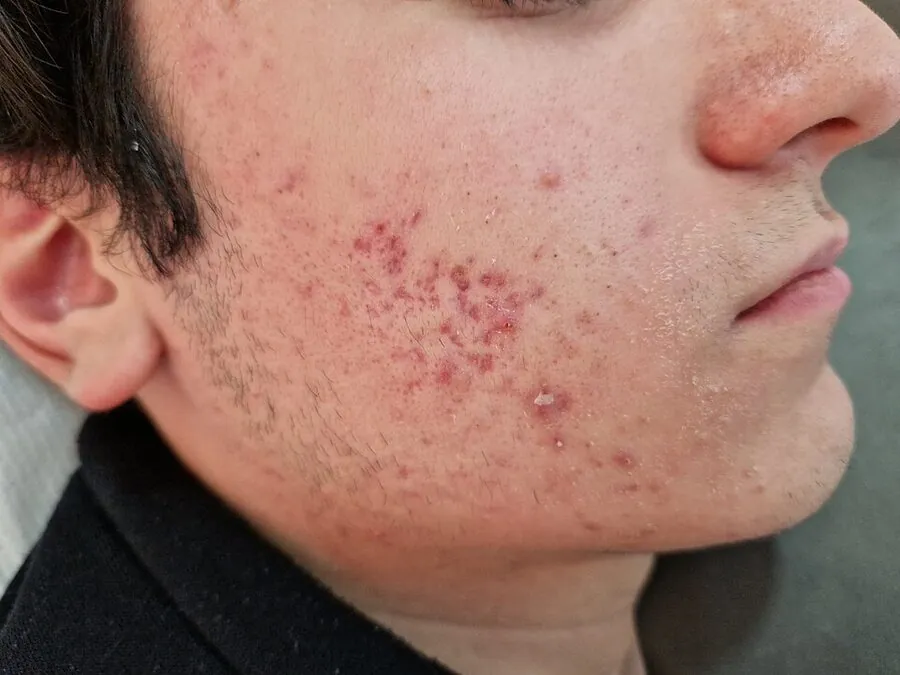
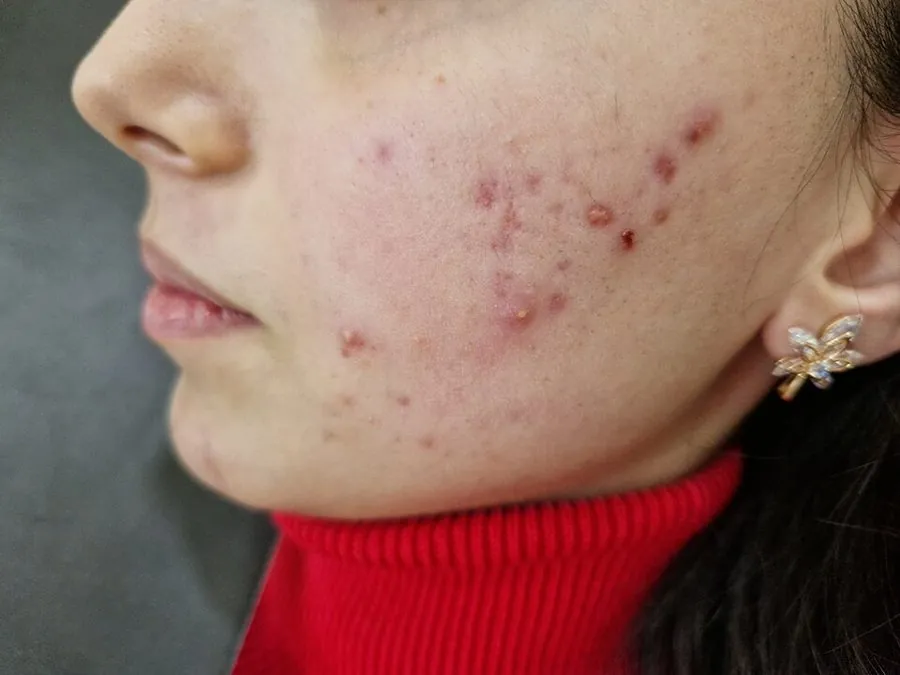
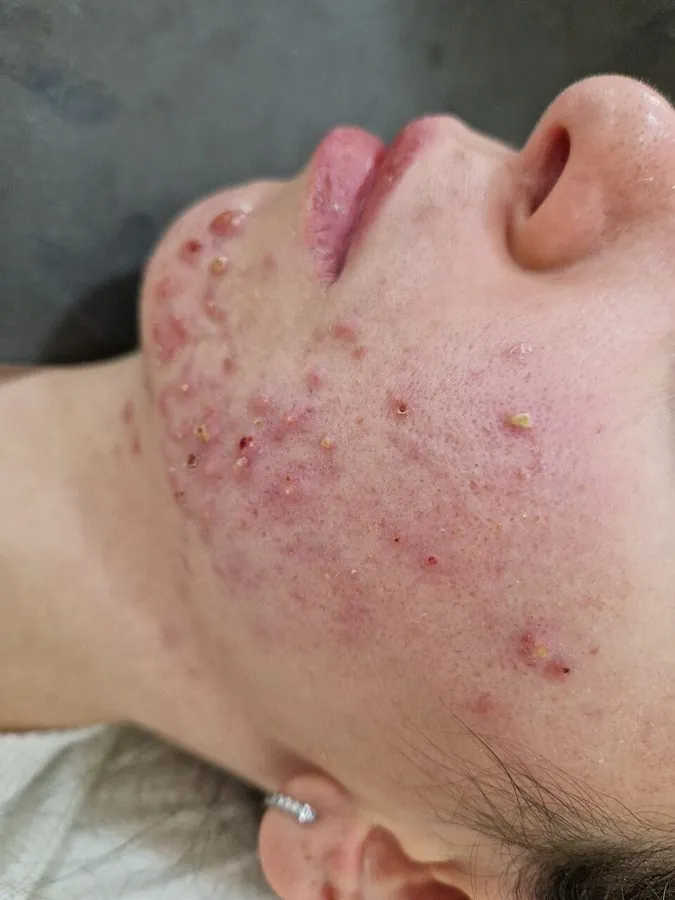
Inflammatory nodular acne of the cheek
Inflammatory nodular acne of the cheek. Image: Sedef94, via Wikimedia Commons (CC BY-SA 4.0).
Inflamed nodules over the cheek
Inflamed nodules over the cheek. Image: Sedef94, via Wikimedia Commons (CC BY-SA 4.0).
Nodules and cysts along the chin and jawline
Nodules and cysts along the chin and jawline. Image: Sedef94, via Wikimedia Commons (CC BY-SA 4.0).

What makes an acne lesion cystic?

Ordinary pimples are shallow: inflammation near the surface, resolving in days. In nodulocystic acne the follicular wall ruptures deep, spilling its contents into the dermis, and the immune response walls off an inflamed nodule far below the surface. That depth explains everything patients notice — the pain (pressure on deep nerve endings), the duration (deep inflammation resolves slowly), the fact that squeezing produces nothing but more damage, and the scarring, because the battle is fought inside the skin's structural layer itself [1].

Why routines fail and time is the enemy

Topicals matter in mild and moderate acne, but a cream cannot reach a lesion seated millimetres down — which is why cystic acne shrugs off skincare that works for everyone else. Meanwhile the clock runs: each deep lesion that flares and subsides can take collagen with it, and scar revision is always harder than scar prevention. Current guidelines are unambiguous that severe acne warrants escalation to systemic therapy rather than prolonged topical experimentation [1]. In adult women, a cyclical jawline pattern overlaps with hormonal acne, and the hormonal arm changes the plan.

What actually works for cystic acne?

Medical treatment, matched to severity. Guidelines support oral therapy for nodulocystic disease — antibiotic courses in defined roles, hormonal therapy in women where indicated, and oral isotretinoin as the established option for severe or scarring acne, prescribed and monitored by a physician [1,2]. In-clinic procedures support the medical arm: intralesional treatment can settle an acute cyst, and laser-based protocols in the acne programme target inflammation and oil output. Once disease is controlled, the Tetra Pro scar programme and 4D scar reconstruction address what past cysts left behind — but control comes first; scar treatment during active cystic acne is building on a battlefield.

What doesn't work for cystic acne?

Squeezing — a deep cyst has no exit; pressure ruptures it sideways into more dermis and doubles the scar. Drying toothpaste-style spot hacks on a lesion seated beyond their reach. Serial facials for a medical-grade condition. And the costliest mistake: waiting a year to see a doctor, then spending far longer treating scars that earlier treatment might have prevented.

“You cannot pop a cyst that has no exit — pressure just moves the rupture sideways, and the scar is the receipt.”

— Dr Sin Yong

Dr Sin Yong’s Viewpoint

Cystic acne is the one form of acne where I get openly urgent with patients. Every month of deep, active inflammation is billed later in scar tissue, and scar revision costs multiples of acne control — in money, sessions and time. Acne that hurts is acne that scars. Treat it now.

Prefer Not to Use WhatsApp?

Use the short enquiry form instead →

Leave your name, mobile number and email and the clinic will contact you directly. No obligation.

Your details are delivered directly to Dr Sin Yong's clinic team.

Thank you — your enquiry has been received. The clinic will contact you during opening hours (Mon–Fri 10am–8pm, Sat 11am–3pm).

Prefer a preliminary view first? You can also WhatsApp a photo of the area for Dr Sin Yong to review before you decide on a visit.

Which type do you have?

Cystic acne and its look-alikes, and how each is approached
Type / look-alikeHow to recognise itWhat it needsWhat does not work
Acne nodule (deep, firm lump)Firm, tender lump deep in the skin, no visible headMedical grading, and treatment matched to severitySqueezing, which pushes inflammation deeper
Acne cyst (deep, fluid-filled)Larger, fluid-filled, painful lump that may refill in one spotPhysician assessment, and in-clinic care for individual lesionsDrying spot hacks that cannot reach the lesion
Hormonal jawline acne (cyclical lumps)Cyclical deep lumps on the jaw and chin in adult womenAssessment of hormonal factors and medical therapySkincare alone, which cannot reach deep lesions
Papulopustular acne (superficial pimples)Smaller red bumps and pustules near the surfaceTopical and routine-based treatment, as gradedAssuming it is as serious as nodulocystic acne
Epidermoid cyst or boilSingle lump with a central pore, or tender abscessDiagnosis before any treatmentTreating it like acne without examination

What does not work, and why

When to see a doctor

Myths we hear in clinic

“Cystic acne can be popped like an ordinary pimple.”

A deep cyst has no exit, so squeezing pushes inflammation sideways and can worsen scarring.

“Diet alone can clear cystic acne.”

Diet can modify acne in some people, but severe nodulocystic acne needs medical treatment.

Questions Patients Actually Ask

How do I know if my acne is cystic?+

Depth, pain and duration: lumps you feel more than see, tender to pressure, lasting weeks without coming to a head. That triad is deep inflammatory acne and merits medical review.

Will cystic acne go away on its own?+

Individual cysts eventually subside; the condition keeps producing new ones, and each cycle risks lasting scarring. Spontaneous resolution is measured in years — scars arrive faster.

Is isotretinoin dangerous?+

It is a serious medication with well-defined monitoring requirements and absolute rules around pregnancy — which is exactly why it is prescribed and supervised by a physician, not sourced casually. Under proper supervision it remains the guideline-backed option for severe acne.

Can I treat the scars while I still have acne?+

Active inflammation undermines scar work. Control the disease first, then reconstruct — the sequencing protects your investment in both.

Why does my cyst refill in the same spot?+

A ruptured follicle can heal into a walled cavity that reinflames repeatedly. Recurrent same-spot cysts often need definitive in-clinic treatment of that structure, not another cream.

Does diet cause cystic acne?+

Evidence links high-glycaemic diets and some dairy to acne severity in some people, but diet is a modifier. Severe nodulocystic acne is not cured by any menu — it needs medical treatment.

Should I see a dermatologist for cystic acne?+
Cystic acne should be seen by a doctor rather than managed with skincare alone. A physician can grade the severity, start appropriate medical treatment and plan scar care once the acne is controlled. Where the acne is very severe, unusual, not responding to treatment, or linked to a suspected hormonal or other medical condition, referral to a dermatologist is appropriate. What matters most is not waiting, because each month of deep inflammation risks further scarring.
How long does cystic acne treatment take to work?+
Longer than most people hope, and it varies. Oral treatments work over weeks to months rather than days, and new lesions can still appear early in a course. Progress is judged at review by how many new nodules are forming and how quickly existing ones settle, and the plan is adjusted if it is not working. Individual painful cysts can be managed in the meantime, and scar treatment is planned once the acne is under control.
How quickly does a cortisone injection work on a cyst?+
The inflammation in an injected cyst usually starts to settle within a few days, as pain and swelling ease, though the lump can take longer to flatten fully and a mark may remain. Response varies with the size and depth of the lesion. It calms one acute lesion and has no effect on others.
Can a cortisone shot leave a dent in the skin?+
It can. If too much steroid is used, or it is placed too shallow, the fat beneath the site can thin and leave a small depression, or the skin can lighten. Both are more likely with stronger concentrations and repeated injections in the same spot. They often improve over several months, but not always, which is why dilute doses, careful depth and restraint with repeat injections matter.
Is a cortisone shot the same as draining a cyst?+
No. A cortisone injection places a dilute steroid into the lesion to calm the inflammation without opening it. Drainage opens a lesion to release its contents and is considered only in selected cases, such as a soft, fluctuant lesion, because cutting into deep acne can itself scar. Squeezing or needling a cyst at home is neither, and pushes inflammation deeper.
What causes cystic acne?+
In nodulocystic acne the follicle wall ruptures deep in the dermis and spills its contents, and the immune response walls off a painful, inflamed lump. Oil production, bacteria, follicle blockage, genetics and, in some women, hormonal patterns all contribute. Diet can modify acne in some people but is not the sole cause.
Can cystic acne be fully cured?+
Cystic acne can be controlled with medical treatment, and many people see it settle over time, but no outcome can be promised. Individual lesions eventually subside while new ones may form. Early assessment matters because deep inflammation can leave scars that need separate treatment once the acne is controlled.
What is the right treatment for cystic acne?+
It depends on severity, pattern and the person. Options a doctor may consider include oral antibiotics, hormonal therapy in women where indicated, and oral isotretinoin, each needing assessment and prescription. In-clinic care can support individual lesions, and referral to dermatology is appropriate where acne is severe or not responding.
How much does cystic acne treatment cost in Singapore?+
The fee depends on severity, whether prescription medicines are needed, review visits, any in-clinic procedures for individual cysts, and whether scar treatment is planned later. Dr Sin Yong gives a written quote at consultation after grading the acne, and the consultation also decides whether treatment here or dermatology referral is more appropriate.

References

  1. Guidelines of Care for the Management of Acne Vulgaris — Journal of the American Academy of Dermatology (2024).
  2. Adult Female Acne: A Guide to Clinical Practice — Anais Brasileiros de Dermatologia (PMC).

Can a painful cyst be injected to make it go down?

In selected cases, yes. A doctor can inject a single inflamed cyst with a small, diluted dose of corticosteroid, which calms the inflammation within that lesion. It is used for an acute, painful nodule, for example one that is large and tender or arrives before an important event, rather than as a treatment for acne itself, because it does nothing to stop new cysts forming.

The dose and the depth matter. Too much steroid, or steroid placed too shallow, can thin the skin and leave a dent or a pale patch at the site; these often improve with time, but not always. That is why it is a doctor's procedure, done after examination, and not something to repeat again and again on the same spot. A cyst that keeps refilling in one place may have become a walled cavity that needs a different approach.

Squeezing or needling a cyst at home is another matter entirely: it pushes the inflammation deeper and makes scarring more likely.

Is cystic acne hormonal?

Sometimes. Androgens drive oil-gland activity in everyone, so hormones play a part in all acne, but in some adult women cystic acne follows a recognisable pattern: deep, tender lumps along the jaw and chin that flare before a period. That pattern raises the question of a hormonal contribution, and occasionally of an underlying condition such as polycystic ovary syndrome, which a doctor may look into with a history, an examination and sometimes blood tests.

Where a hormonal pattern is confirmed, treatment that reduces the effect of androgens on the skin can be part of the plan, for example certain combined oral contraceptives or anti-androgen medicines such as spironolactone. These are prescription medicines with their own side effects and they are not suitable for everyone, so the choice follows a medical assessment. Hormonal therapy is not used in men, and in severe or scarring disease it is often combined with other oral treatment rather than used instead of it.

Cystic acne treatment options, compared
OptionWhat it doesWhat it cannot doTypical recoveryWho it tends to suit
Oral isotretinoin (prescription)Shrinks oil glands, reduces oil output and acts on the main drivers of acne; guideline-supported for severe or scarring nodular acneTreat existing scars; it is not used in pregnancy and needs regular monitoringDry lips and skin are common; blood tests and reviews during the courseSevere, scarring or treatment-resistant nodulocystic acne, after a doctor's assessment
Oral antibiotics (prescription)Reduce inflammation and bacteria for a defined period, usually alongside a topical treatmentBe used long term or on their own, because of resistance; they do not reduce oil production as isotretinoin doesPossible stomach upset or sun sensitivity, depending on the medicineInflammatory acne needing a time-limited course, or a bridge while other treatment starts
Hormonal therapy for women (prescription)Reduces the effect of androgens on oil glands, for example with certain combined oral contraceptives or anti-androgen medicinesSuit everyone; it is not used in men, and medical history decides suitabilitySide effects vary with the medicine and are discussed beforehandWomen with a cyclical, jawline-predominant pattern of deep lesions
Intralesional corticosteroid injectionA small, diluted dose placed into one inflamed cyst to calm the inflammation in that lesionStop new cysts forming; too strong a dose can leave a dent or pale markLittle to see; occasionally temporary thinning or lightening at the siteAn acute, painful individual cyst, alongside treatment of the underlying acne
Laser-based acne protocolsDirected at inflammation and oil output as support for medical treatmentReplace oral treatment in severe nodulocystic acneRedness that settles; varies with the protocolPeople already on a medical plan who want in-clinic support
Scar treatment (Tetra Pro scar programme, 4D scar reconstruction)Addresses the scars that past cysts left behindControl active acne; working on active disease undermines the resultVaries with the method; discussed before treatmentEstablished scarring once the acne has been controlled

Medically reviewed by Dr Sin Yong, MBBS (NUS), MRCS (Edinburgh) · Last updated 5 October 2026 · Editorial policy

Cortisone injection for acne in Singapore: what happens, and when it is not used

A cortisone shot for acne is a doctor's procedure: after examination, a very dilute corticosteroid, most often triamcinolone, is injected through a fine needle into the centre of one inflamed nodule or cyst. The aim is to calm the inflammation inside that lesion, which usually begins to settle over the following days. It treats that lesion only, and does nothing for the spots around it or for the acne that produced it.

It is not used for every spot. Small surface pimples and comedones do not need it; a soft, fluctuant lesion full of pus may need different care; and a cyst that has been injected before in the same place is approached cautiously, because repeated steroid at one site raises the risk of a dent from fat atrophy or a pale patch, which shows more in darker skin. Dents and pale patches often improve over months, but not always. Pregnancy, suspected infection and lesions close to the eye are discussed individually. If cysts keep appearing, injections are treating them one at a time; the underlying nodulocystic acne needs medical treatment matched to its severity, which is what prevents new cysts and the scars they leave.

Related reading
Follow Dr Sin Yong
InstagramTikTokYouTubeThreadsXLinkedInFacebook
Dr Sin Yong · Every assessment personally performed
WhatsApp Enquiry