Conditions · Face · Pigment Disorders

Sun Spots (Solar Lentigines)

Medically reviewed by Dr Sin Yong · Last reviewed · 10 min read · Assessed personally by Dr Sin Yong · Jump to questions

A solar lentigo is a discrete, sharply bordered brown spot — the skin's permanent bookmark of cumulative sun exposure, appearing on the cheeks, temples, shoulders and the backs of the hands from the 40s onward. Unlike melasma, sunspots are structurally simple — which is why, correctly diagnosed, they are among the most laser-responsive pigment problems in aesthetic medicine.

WhatsApp Dr Sin Yong →
Invited by Device Makers to Share His Expertise
International KOL for 14+ device brandsShared his clinical expertise with 500+ doctors across AsiaMBBS (NUS) · MRCS (Edinburgh) · MSc with Distinction (Queen Mary, London) · MSc (Cardiff)Every assessment personally by Dr Sin Yong

Sun spots (solar lentigines) are flat, sharply bordered brown spots caused by cumulative sun exposure on the face, shoulders, forearms and backs of the hands. Unlike melasma, they are structurally simple and are treated with pigment-selective lasers or IPL, but any changing or irregular spot is examined with a dermatoscope before treatment.

Also called: age spots, liver spots, 晒斑, 老年斑

Key takeaways
  • Sun spots (solar lentigines) are flat, sharply bordered brown spots caused by cumulative sun exposure.
  • They are benign, but a changing, irregular or outlier spot is examined with a dermatoscope before any treatment.
  • They differ from melasma, freckles and seborrhoeic keratoses, which need different management.
  • Pigment-selective lasers or IPL are the usual options for discrete spots; creams and scrubs are limited.
  • In medium and darker skin, post-inflammatory hyperpigmentation is the main risk, so settings and sun protection matter.

Key Facts

What it is
A focal overgrowth of pigment-producing activity at the epidermal junction — cumulative UV's signature
The look
Discrete, flat, tan-to-dark-brown, sharply bordered — unlike melasma's soft symmetric patches
Where
Sun-exposed real estate: cheeks, temples, nose, shoulders, forearms, backs of hands
Evidence-supported treatments
Pigment-selective lasers and IPL lead the clinical-trial literature
The Asian-skin caveat
Post-treatment PIH after lentigo lasering is well documented in darker skin — settings and aftercare decide the result
The impostor rule
A changing, irregular or outlier 'sunspot' gets a diagnosis before a laser — lentigo maligna exists
Who assesses this
A physician — the odd spot out gets a dermatoscope first
Typical first step
Confirming lentigo vs mimics, then pigment-laser planning for your skin type

What do sun spots look like?
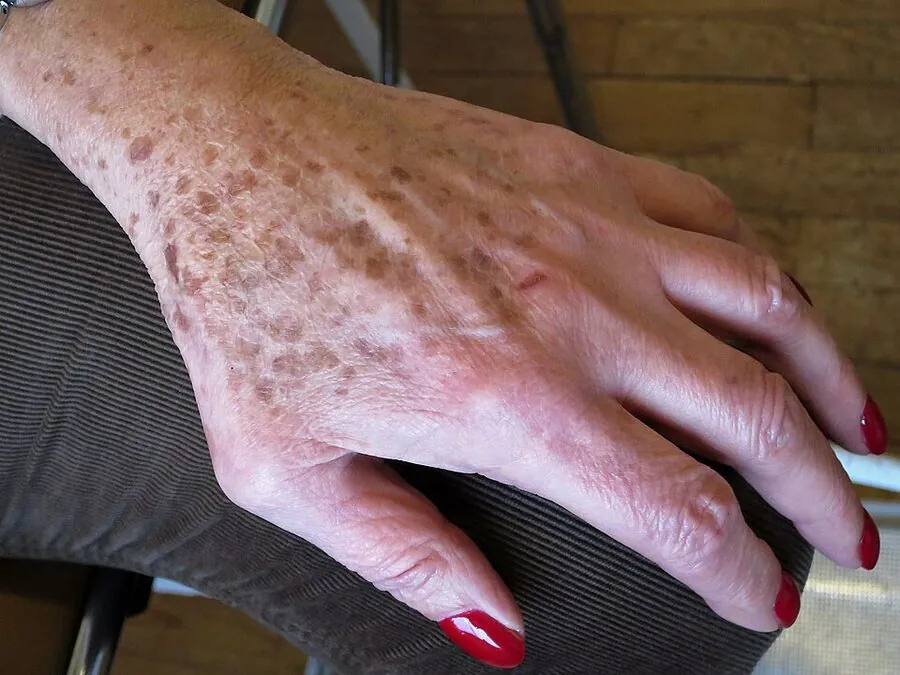
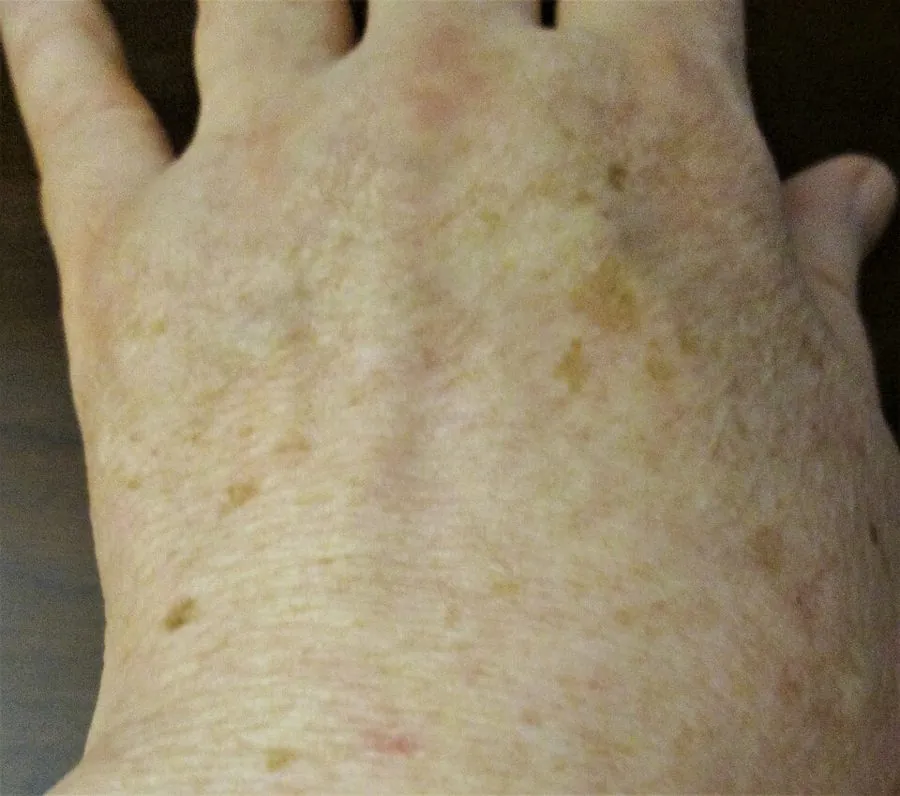
Solar lentigines on the dorsal hand — flat brown sun spots on chronically exposed skin
Solar lentigines on the dorsal hand — flat brown sun spots on chronically exposed skin. Image: Alain Gérard, via Wikimedia Commons (CC BY-SA 4.0).
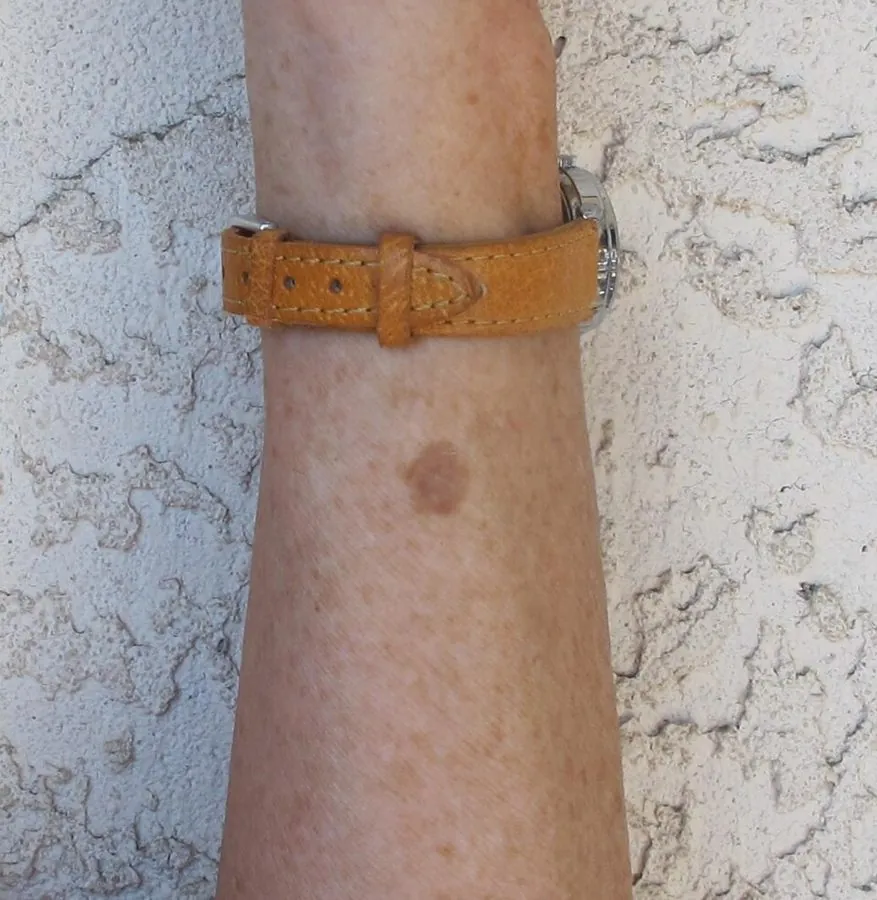
A solar lentigo on the forearm
A solar lentigo on the forearm. Image: Invertzoo, via Wikimedia Commons (CC BY-SA 4.0).
Widespread lentigines over the trunk and arms
Widespread lentigines over the trunk and arms. Image: Beyond My Ken, via Wikimedia Commons (CC BY-SA 4.0).

What is a sunspot — and what is it not?

Solar lentigines are the arithmetic of decades of sun: focal areas where UV has permanently upregulated pigment production. They are flat, stable and benign. What they are not is interchangeable with other browns: melasma (soft, symmetric, relapsing — see the melasma guide), freckles (genetic, fading in winter), seborrhoeic keratoses (raised, waxy — see age warts), and rarely lentigo maligna, an early melanoma that impersonates a sunspot. The which-brown-is-yours guide covers the full differential — and it is the reason every pigment consult here starts with diagnosis, not a laser menu.

What actually works for sun spots?

The 2025 systematic review of clinical trials places pigment-selective lasers and intense pulsed light at the top of the evidence for lentigines, with picosecond and Q-switched systems achieving clearance of individual spots — frequently in a small number of sessions [1]. This is the pigment problem lasers were made for: a discrete epidermal target with a clear endpoint. In Dr Sin Yong's practice this work runs on the picosecond platforms described on the T2 Frax Radiance and alexandrite laser pages, with laser toning handling diffuse background tone. Hands and forearms — the age-giveaway zones — are treated on the same principles, alongside hand rejuvenation where volume is part of the picture.

The caveat that matters in Singapore skin

The multicentre survey literature documents a specific complication worth naming: post-inflammatory hyperpigmentation after lentigo treatment in darker skin types — the spot clears, then a brown mark returns weeks later as the skin's inflammatory response deposits new pigment [2]. In Fitzpatrick III–V skin this is the central technical challenge: conservative fluences, correct wavelength choice, strict post-treatment photoprotection, and sometimes a preparatory topical phase. It is manageable and usually temporary when it occurs — but it is why lentigo lasering in Asian skin is a physician's judgement call, not a walk-in zap.

What doesn't work for sun spots?

Fading creams on an established lentigo — topicals lighten modestly at best; the trial data belongs to devices [1]. Scrubs and peels bought online — surface exfoliation cannot reach the pigment factory. Ignoring the odd one out — the sunspot that is darker, larger, growing or irregularly bordered is the one that earns a dermatoscope before any treatment. And skipping sunscreen after clearance — the sun that made them is still overhead, and untreated habits regrow the collection.

If the lesion in question is a true mole rather than a sun spot, Dr Sin Yong’s dermatoscopy-first mole removal protocol applies — the mole is scoped and assessed before any removal method is chosen.

“A sunspot is the easiest pigment a laser will ever clear — and in Asian skin, the easiest place for the wrong settings to write a new mark where the old one was.”

— Dr Sin Yong

Dr Sin Yong’s Viewpoint

Sunspots are the most satisfying pigment I treat — discrete targets that clear properly with the right laser. In our skin types the art is entirely in restraint: conservative settings and strict aftercare so we do not trade a brown spot for a post-inflammatory mark. And the odd spot out always meets my dermatoscope before my laser.

Prefer Not to Use WhatsApp?

Use the short enquiry form instead →

Leave your name, mobile number and email and the clinic will contact you directly. No obligation.

Your details are delivered directly to Dr Sin Yong's clinic team.

Thank you — your enquiry has been received. The clinic will contact you during opening hours (Mon–Fri 10am–8pm, Sat 11am–3pm).

Prefer a preliminary view first? You can also WhatsApp a photo of the area for Dr Sin Yong to review before you decide on a visit.

Which type do you have?

Sun spots and the brown marks they are mistaken for
Type / look-alikeHow to recognise itWhat it needsWhat does not work
Solar lentigo (sun spot)Flat, sharply edged tan-to-brown spot on sun-exposed skinDiagnosis, then pigment-selective laser or IPL planned for skin typeFading creams and scrubs on an established spot
Melasma, a common look-alikeSoft-edged, symmetrical patches that relapse with heat and sunDiagnosis, gentle management and strict sun protectionAggressive laser treated as if it were a sun spot
Freckles (ephelides), a look-alikeSmall, genetic, pale-brown spots that fade with less sunOften no treatment; sun protection if bothersomeTreating as sun damage without assessment
Seborrhoeic keratosis, a look-alikeRaised, waxy, stuck-on lesion rather than a flat spotDiagnosis, then a removal method chosen if wantedPigment lasers chosen on the assumption of a sun spot
Lentigo maligna (early melanoma)Changing, irregular or darker patch that mimics a sun spotDermatoscope examination, with biopsy or dermatology referral if suspiciousTreating with a laser before diagnosis

What does not work, and why

When to see a doctor

Myths we hear in clinic

“Sun spots can be faded with creams or scrubs.”

Topicals lighten only modestly, and surface exfoliation does not reach the pigment.

“Every brown spot is a harmless sun spot.”

Melasma, seborrhoeic keratoses and, rarely, lentigo maligna can look similar, so a changing spot is examined first.

Questions Patients Actually Ask

How is a sunspot different from melasma?+

Borders and behaviour: lentigines are discrete and sharply edged and sit still; melasma is soft-edged, symmetric and relapsing. The distinction decides everything about treatment, which is why diagnosis comes first.

Do sunspot removal creams work?+

Modestly at best. The clinical-trial evidence for clearing lentigines belongs overwhelmingly to pigment lasers and IPL; creams support around the edges.

How many sessions does laser removal take?+

Individual lentigines often clear in few sessions — but honest planning depends on spot depth, skin type and the PIH-avoidance strategy, which is set at assessment.

Why did my spot come back darker after laser elsewhere?+

Likely post-inflammatory hyperpigmentation — a documented risk in darker skin when settings run hot or aftercare lapses. It typically fades, and it is preventable with conservative technique.

Can sunspots turn into cancer?+

A true solar lentigo is benign. The concern is the impostor — lentigo maligna can resemble a sunspot, which is why a changing or atypical spot gets examined before anyone treats it.

Will new spots keep appearing?+

With continued unprotected exposure, yes — clearance treats the spots, not the habit. Daily photoprotection is what protects the result.

What causes sun spots?+
Sun spots are caused by cumulative ultraviolet exposure over years, which leaves focal patches of increased pigment activity in the skin's surface layer. They appear on sun-exposed areas such as the cheeks, temples, shoulders, forearms and backs of the hands. Skin type, age and lifetime sun exposure influence how many appear.
Can sun spots be fully cleared?+
Individual spots can often be treated with pigment-selective lasers or IPL, but no outcome can be promised. Treatment addresses existing spots, not the sun exposure that caused them, so new ones can appear without daily sun protection. In medium and darker skin, a temporary brown mark can follow treatment, which is why settings and aftercare matter.
Which treatment suits sun spots?+
It depends on the diagnosis, spot depth and your skin type. A confirmed solar lentigo is usually treated with a pigment-selective laser or IPL, with settings and aftercare chosen to limit post-inflammatory hyperpigmentation. Melasma, seborrhoeic keratoses and any suspicious lesion need a different route, so diagnosis, sometimes with a dermatoscope, comes before any laser.
How much does sun spot treatment cost in Singapore?+
The fee depends on the number and size of spots, the areas treated, the laser or IPL platform and consumables used, the passes planned, and whether laser toning or skin preparation is added. A written quote is given at consultation, after Dr Sin Yong has examined the spots and skin type. The consultation also decides whether treatment is advised at all, since a suspicious spot is examined first.

References

  1. Treatment of Solar Lentigines: A Systematic Review of Clinical Trials — Journal of Cosmetic Dermatology (PMC).
  2. Postinflammatory Hyperpigmentation Associated with Treatment of Solar Lentigines Using a Q-Switched 532-nm Nd:YAG Laser: A Multicenter Survey — PubMed.
  3. Solar Lentigo — DermNet NZ.

Medically reviewed by Dr Sin Yong, MBBS (NUS), MRCS (Edinburgh) · Last updated 7 September 2026 · Editorial policy

Follow Dr Sin Yong
InstagramTikTokYouTubeThreadsXLinkedInFacebook
Printable patient guide (PDF): Pigmentation lasers: preparing and caring for your skin — medically reviewed by Dr Sin Yong.
Dr Sin Yong · Every assessment personally performed
WhatsApp Enquiry