What do forehead lines look like?
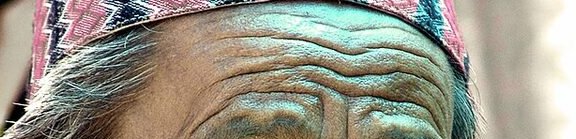
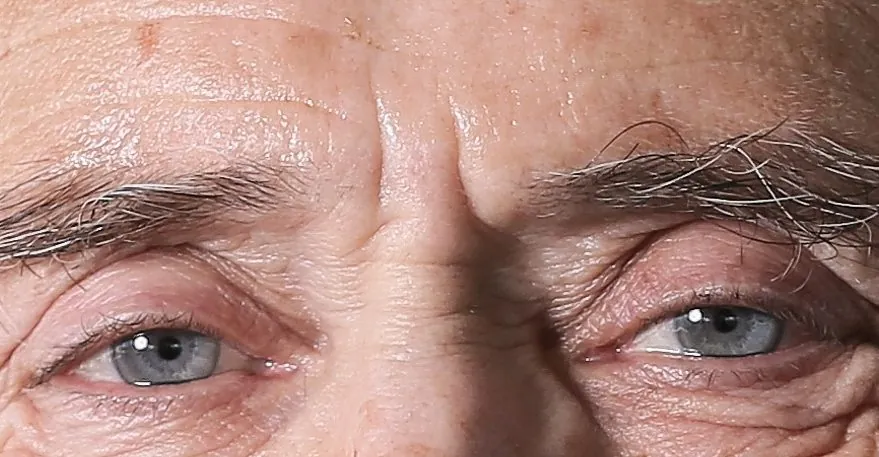
What causes forehead lines and frown lines?
Horizontal forehead lines are the work of the frontalis — the sheet that raises your brows in every expressive sentence. The vertical '11s' and the horizontal crease at the nose root belong to the glabellar complex — corrugator and procerus — recruited by concentration, glare and negative emotion. Each contraction folds the same skin along the same perpendicular axis; young dermis springs back, thinning dermis keeps the crease. The network meta-analyses of randomised trials establish botulinum toxin type A as the evidence-anchored treatment for these dynamic lines [1,2] — among the most-studied interventions in aesthetic medicine.
The compensation trap — read this before treating the forehead
Here is the assessment subtlety that separates physician planning from menu ordering: in many patients the frontalis is not idly expressive — it is holding the brows up to keep heavy or hooded lids out of the visual field. Relax that recruited frontalis fully and the brows settle, the hooding lands, and the patient reports heaviness — the classic over-treatment complaint. The examination therefore reads brow position and lid reserve first; where the forehead is compensating, treatment is conservative, pattern-adjusted, and sometimes redirected to the actual problem — the brow and lid — via energy-based lifting (HIFU, Time Freeze) rather than more relaxation of the muscle doing the lifting.
What actually works for forehead and frown lines?
For dynamic lines: conservative, pattern-mapped botulinum toxin — the approach of the wrinkle prevention programme — with meta-analytic support for both glabellar and combined upper-face treatment [1,2]. For lines already etched at rest: the skin arm joins — fractional resurfacing and biostimulation (polynucleotides, bio-remodelling) to rebuild the dermis the crease carved through. Deep static glabellar folds occasionally warrant careful filler — a high-caution zone reserved for experienced hands. And where deflated temples unframe the brow, support there changes the upper face's whole read.
What doesn't work for forehead and frown lines?
Forehead-training and 'face yoga' for lines authored by muscle activity — strengthening the author writes more. Anti-wrinkle creams against static folds — surface hydration softens texture, not carved dermis. Freezing the forehead flat while ignoring why it was working — the compensation trap in action. And treating the forehead in isolation forever — etched lines announce that the skin arm is overdue, and toxin alone cannot un-carve them.
“Before relaxing a hard-working forehead, ask what it is working on — half the time it is holding your eyelids open.”
— Dr Sin Yong
Dr Sin Yong’s Viewpoint
Before I relax a hard-working forehead I ask what it is working on — half the time it is holding heavy eyelids out of the visual field, and freezing it flat delivers the heaviness the muscle was hiding. Pattern-mapped, conservative dosing exists precisely for this. The forehead is an exam question, not a menu item.
Prefer Not to Use WhatsApp?
Use the short enquiry form instead →
Leave your name, mobile number and email and the clinic will contact you directly. No obligation.
Prefer a preliminary view first? You can also WhatsApp a photo of the area for Dr Sin Yong to review before you decide on a visit.