Conditions · Face · Rashes & Redness

Perioral Dermatitis

Medically reviewed by Dr Sin Yong · Last reviewed 7 October 2026 · 9 min read · Assessed personally by Dr Sin Yong · Jump to questions

Perioral dermatitis is an inflammatory eruption of small red papules and pustules clustered around the mouth — sometimes the nose and eyes — with a telltale clear zone bordering the lips. Its defining trap: topical steroids calm it for days, then feed it for months.

WhatsApp Dr Sin Yong →
Invited by Device Makers to Share His Expertise
International KOL for 14+ device brandsShared his clinical expertise with 500+ doctors across AsiaMBBS (NUS) · MRCS (Edinburgh) · MSc with Distinction (Queen Mary, London) · MSc (Cardiff)Every assessment personally by Dr Sin Yong

Perioral dermatitis is an inflammatory rash of small red bumps and pustules around the mouth, sometimes the nose and eyes, that typically spares a narrow rim of skin at the lip border. Topical steroids are a common trigger: they calm it briefly, then it flares when they are stopped. Treatment usually starts with stopping steroids and simplifying the skincare routine.

Key takeaways
  • Perioral dermatitis is an inflammatory rash of small red bumps around the mouth, typically sparing a rim at the lip border.
  • Topical steroid creams are a common trigger: they calm the rash briefly, then it flares when they are stopped.
  • Diagnosis rests on pattern and history, especially steroid use, because it can mimic acne, rosacea or eczema.
  • Treatment usually starts with stopping steroids and simplifying skincare, with prescribed medicine for stubborn disease.
  • Stronger steroids, scrubs and layering new products do not help and can sustain the rash.

Key Facts

Who it affects
Predominantly women aged roughly 20–45; children can also develop it
Signature pattern
Papules and pustules sparing a narrow rim of skin immediately around the lip margin
Leading trigger
Topical corticosteroids — including creams borrowed for a different rash
Other associations
Occlusive cosmetics, heavy moisturisers, fluorinated toothpaste (reported), steroid inhalers
The rebound cycle
Steroid suppresses → rash returns worse on stopping → steroid reapplied
First-line principle
Zero therapy: stop the steroid and strip the routine, then treat what remains
Who assesses this
A physician — the steroid history is the key diagnostic question
Typical first step
Supervised steroid withdrawal and radical routine simplification

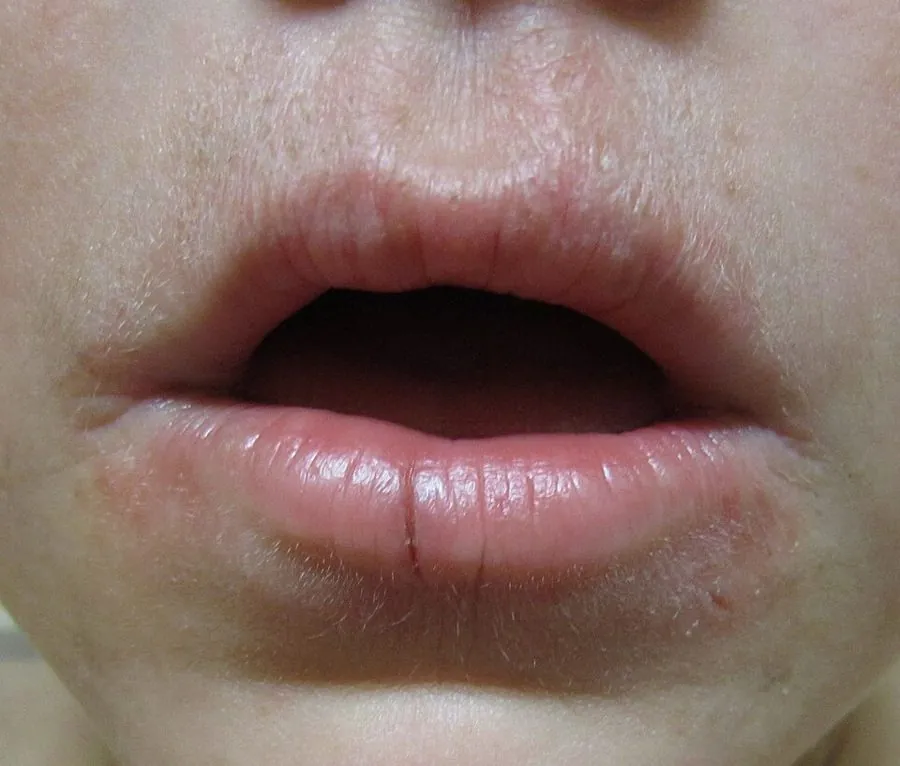
What does perioral dermatitis look like?

Perioral dermatitis: small papules clustered around the mouth, sparing the lip margin
Perioral dermatitis: small papules clustered around the mouth, sparing the lip margin. Image: Johannes Köhler, via Wikimedia Commons (CC BY-SA 4.0).
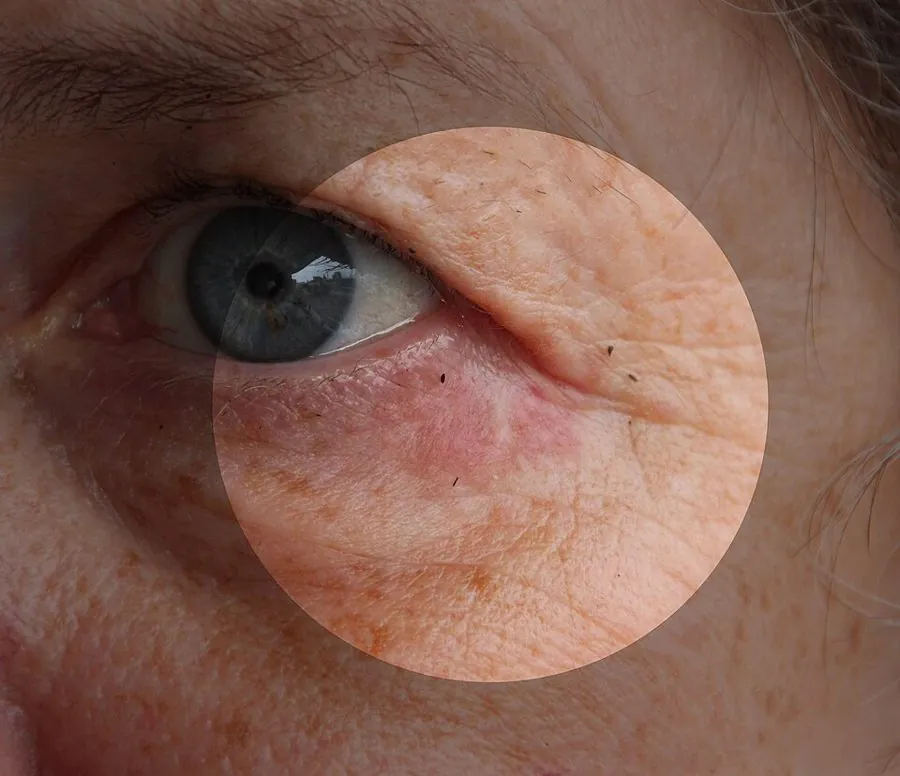
The periocular variant around the eye
The periocular variant around the eye. Image: Photograph: Frank C. Müller, Frankfurt am Main, via Wikimedia Commons (CC BY-SA 4.0).
Irritant rash bordering the lips
Irritant rash bordering the lips. Image: James Heilman, MD, via Wikimedia Commons (CC BY-SA 3.0).

What it is and why it starts

Perioral dermatitis (more precisely, periorificial dermatitis) sits clinically between rosacea, eczema and acne, and reviews still describe its exact cause as multifactorial — a disturbed skin barrier, follicular flora and external triggers acting together [1,2]. What is firmly established is what sustains it: topical corticosteroid use precedes a large share of cases. A steroid cream borrowed for an itch calms the area, the rash rebounds on stopping, the cream goes back on — and the cycle can run for months. Cosmetic layering does its own damage: studies cited in the literature associate heavy, occlusive moisturiser routines with substantially higher risk [2].

Why does the steroid cream keep making it worse?

The cruelty of this condition is that the thing that soothes it is the thing that drives it. Each steroid application suppresses inflammation for a few days; each withdrawal rebounds harder. Escaping requires accepting a temporary flare — the literature calls the first step “zero therapy”: stop the steroid, stop the occlusive products, simplify to almost nothing [1,2]. Patients who understand the rebound in advance get through it; patients who don't go back to the cream at day four and reset the clock.

What actually works for perioral dermatitis?

After steroid withdrawal, evidence supports topical anti-inflammatory and antimicrobial agents, with oral tetracycline-class medication for stubborn or extensive disease — physician-supervised, since courses run weeks [1,2]. Routine simplification is not a footnote; it is half the treatment. Where redness and barrier damage persist after the eruption clears, calming laser protocols such as laser toning or the R2 Glow can be considered — after diagnosis, never instead of it. If what you actually have is adult acne or rosacea, the plan differs, which is why Dr Sin Yong examines before treating.

What doesn't work for perioral dermatitis?

Stronger steroids — the accelerant, not the cure. Scrubs and acids on inflamed, barrier-broken skin. Stacking new products to “fix” each flare — the condition feeds on layering. And waiting it out while still using the trigger: perioral dermatitis rarely resolves while the steroid or the ten-step routine continues.

“Perioral dermatitis is the rash the treatment maintains — the steroid that calms it this week is the reason it is still here this year.”

— Dr Sin Yong

Dr Sin Yong’s Viewpoint

Perioral dermatitis is the rash the treatment maintains, and my hardest job is convincing patients to stop the steroid that 'works'. It works for four days; it is also why the rash is still here after a year. Get through the withdrawal with support, simplify radically, and this condition ends.

Prefer Not to Use WhatsApp?

Use the short enquiry form instead →

Leave your name, mobile number and email and the clinic will contact you directly. No obligation.

Your details are delivered directly to Dr Sin Yong's clinic team.

Thank you — your enquiry has been received. The clinic will contact you during opening hours (Mon–Fri 10am–8pm, Sat 11am–3pm).

Prefer a preliminary view first? You can also WhatsApp a photo of the area for Dr Sin Yong to review before you decide on a visit.

Which type do you have?

Perioral dermatitis and its look-alikes
Type / look-alikeHow to recognise itWhat it needsWhat does not work
Classic perioral dermatitis around the mouthSmall papules and pustules around the mouth, sparing a rim at the lip borderStopping the steroid, a simplified routine and supervised anti-inflammatory treatmentStronger steroids, scrubs, acids and stacking new products
Periorificial variant around nose or eyesSimilar bumps around the nose or eyesThe same principles, with the site assessed by a physicianSteroid creams or heavy products applied near the eyes
Adult acne as a look-alikeBlackheads and deeper spots across the cheeks, jaw and chinAn acne-directed plan chosen after assessmentHeavy occlusive moisturisers, which can aggravate it
Rosacea as a look-alikePersistent central facial redness, flushing and visible vesselsRosacea-directed care and a review of triggersSteroid creams, which can worsen it
Irritant or allergic contact dermatitisItchy, scaly rash that follows contact with a productIdentifying and avoiding the irritant, then calming the skinContinuing the suspected product and waiting for it to settle

What does not work, and why

When to see a doctor

Myths we hear in clinic

“Perioral dermatitis is just acne.”

It has no blackheads, behaves differently, and acne products often irritate it.

“A steroid cream that calms the rash is treating it.”

It suppresses the rash briefly, then the rash rebounds, which is how the cycle is sustained.

Questions Patients Actually Ask

Why does the rash spare the skin right next to my lips?+

That narrow clear rim around the vermilion border is a classic diagnostic clue for perioral dermatitis — most other rashes in the area do not respect that line.

Is perioral dermatitis acne?+

No. It has no comedones and behaves differently — acne treatment is usually ineffective and irritating here. It is its own inflammatory condition, sitting closer to the rosacea family.

What happens when I stop the steroid cream?+

Expect a rebound flare for one to several weeks — this is the documented withdrawal course, not failure. Getting through it, with physician support, is how the cycle ends.

Can toothpaste really cause it?+

Fluorinated and tartar-control toothpastes are reported triggers in some patients. It is worth switching if diagnosed, though the steroid and cosmetic history matter more in most cases.

Is it contagious?+

No. It is inflammatory, not an infection you can transmit.

Will it scar?+

Perioral dermatitis itself rarely scars. Persistent redness after clearing usually fades; where it lingers, gentle vascular-calming laser work can be assessed.

What causes perioral dermatitis?+
The exact cause is multifactorial, involving a disturbed skin barrier, follicular flora and external triggers acting together. Topical corticosteroids precede a large share of cases, and heavy occlusive moisturisers and some cosmetics are associated with it. Fluorinated toothpaste and steroid inhalers are also reported associations. A physician reviews the steroid and product history because it guides the plan.
Can perioral dermatitis be fully cured?+
Many people find the rash settles once the trigger, usually a steroid cream or a heavy routine, is stopped and the skin is supported, but response varies and no promise can be made. A rebound flare during withdrawal is expected, and the rash can return if triggers resume. Physician review helps keep the plan on course.
Which treatment suits perioral dermatitis?+
It depends on the type and the history. Stopping the steroid and simplifying the routine usually comes first. Topical anti-inflammatory or antimicrobial agents, or an oral tetracycline-class medicine for stubborn or extensive disease, may then be considered under physician supervision. Lingering redness may be reviewed for calming laser protocols. Diagnosis comes first, since acne and rosacea need different plans.
How much does perioral dermatitis treatment cost in Singapore?+
The cost of perioral dermatitis treatment in Singapore depends on the assessment findings, whether prescription medicines are needed, the number of review visits, and whether laser calming for lingering redness is added. A written quote is given at consultation, after the skin has been examined. The consultation also decides what is advised, so no figure is given in advance.

References

  1. Perioral Dermatitis: Diagnosis, Proposed Etiologies, and Management — Journal of Cosmetic Dermatology (PubMed).
  2. Perioral Dermatitis: Still a Therapeutic Challenge — Acta Clinica Croatica (PubMed).
  3. Periorificial Dermatitis — DermNet NZ.

Medically reviewed by Dr Sin Yong, MBBS (NUS), MRCS (Edinburgh) · Last updated 7 September 2026 · Editorial policy

Follow Dr Sin Yong
InstagramTikTokYouTubeThreadsXLinkedInFacebook
Dr Sin Yong · Every assessment personally performed
WhatsApp Enquiry