Conditions · Face · Redness & Vessels

Post-Inflammatory Erythema (Red Acne Marks)

Medically reviewed by Dr Sin Yong · Last reviewed · 11 min read · Assessed personally by Dr Sin Yong · Jump to questions

PIE is the flat red or pink mark left where a pimple used to be — not a scar, not pigment, but dilated and damaged tiny blood vessels lingering after the inflammation ends. It is the fair-to-medium-skin counterpart of the brown PIH mark, it fades on its own timeline of months, and it answers to vascular treatment — which is why every pigment-directed product ever aimed at it has disappointed.

WhatsApp Dr Sin Yong →
Invited by Device Makers to Share His Expertise
International KOL for 14+ device brandsShared his clinical expertise with 500+ doctors across AsiaMBBS (NUS) · MRCS (Edinburgh) · MSc with Distinction (Queen Mary, London) · MSc (Cardiff)Every assessment personally by Dr Sin Yong

Post-inflammatory erythema (PIE) is the flat red or pink mark left after a pimple: dilated, damaged capillaries, not pigment and not a scar. It blanches under pressure, which separates it from brown PIH marks, and it responds to vascular-directed laser treatment rather than to the pigment creams usually aimed at it.

Also called: PIE, red acne marks, 红痘印

Key takeaways
  • Post-inflammatory erythema, or PIE, is a flat red or pink mark left after a pimple, caused by dilated capillaries.
  • It blanches under pressure, which separates it from brown PIH; a mark you can feel is structural.
  • Pigment-lightening serums do not treat PIE, because the mark contains no excess pigment.
  • Active acne is controlled first and picking stopped; vascular-directed light or laser is then considered.
  • An aesthetic physician can sort PIE, PIH and scarring at assessment, and most acne-prone faces carry a mixture.

Key Facts

What it is
Persistently dilated and damaged capillaries at the site of resolved inflammation — vessels, not melanin
The diagnostic test
Press a glass slide or clear ruler on the mark: PIE blanches (fades under pressure); brown PIH does not
Who gets it
More visible in fair-to-medium skin; deeper skin tones lean toward brown PIH — many people make both
Natural course
Months of gradual fading; new picking or friction resets the clock
Evidence-backed treatment
Vascular-targeted light and laser — IPL and pulsed-dye class devices — per the trial literature
What never works
Pigment-lightening agents — there is no pigment in a PIE mark to lighten
Who assesses this
An aesthetic physician — the pressing-glass test types the mark in seconds
Typical first step
Control active acne, stop the picking, then vascular-directed treatment

What does post-inflammatory erythema look like?

Post-inflammatory erythema: flat red marks left behind after acne settles
Post-inflammatory erythema: flat red marks left behind after acne settles. Image: No machine-readable author provided. Ellywa assumed (based on copyright claims)., via Wikimedia Commons (Public domain).
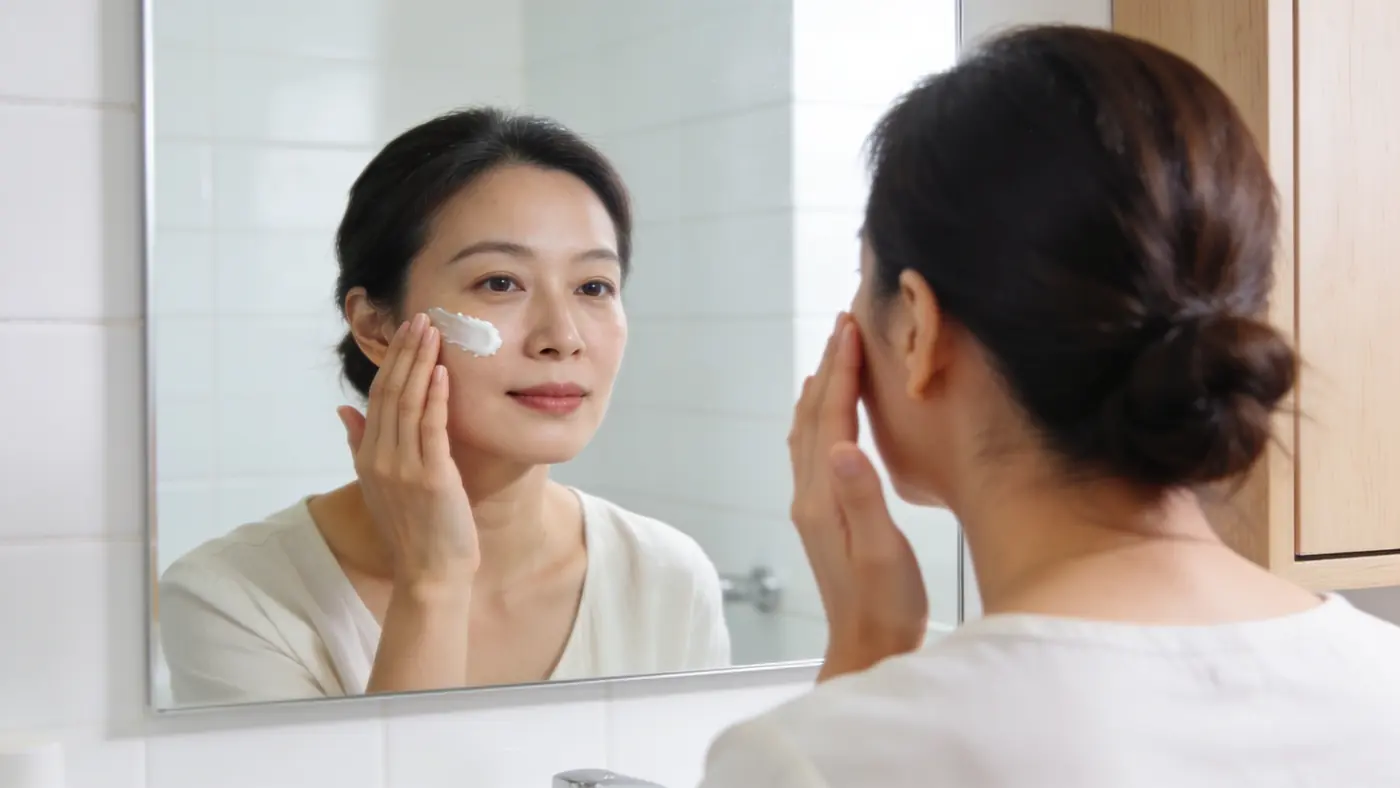
A woman applying sunscreen to her cheek in a bathroom mirror
Daily sun protection is the baseline for every pigment plan.

Why do red marks stay after a pimple heals?

Inflammation is a construction site: to fight a blocked follicle, the skin dilates local capillaries and builds new ones. When the pimple resolves, the vessels do not always demobilise — they linger, dilated and near the surface, reading as a flat pink-to-red mark exactly where the lesion was [1]. The 'Easy as PIE' paper that named the entity distinguished it from both true scarring (structural) and PIH (pigment) precisely because patients and clinics kept treating all three identically — and failing at two of them [1].

PIE, PIH, or a scar? The pressing-glass test

Three leftovers, one minute to sort. Press the mark with a clear glass: PIE blanches — the redness empties out under pressure and refills when you release, because it is blood in vessels. Brown PIH stays exactly as brown — melanin does not move. A mark you can feel as a dip or bump is structural — the territory of true acne scars. Most acne-prone faces carry a mixture, and the treatment plan maps each type to its own tool, because no single device treats all three.

What actually works for PIE?

Vessels answer to vascular treatment. The trial literature supports intense pulsed light and pulsed-dye-class laser for acne-induced erythema — light absorbed by haemoglobin, closing the lingering capillaries [2,3] — the same physics as facial thread vein work, delivered gently across a field of marks. Two sequencing rules protect the result: active acne gets controlled first (or new marks replace treated ones), and settings stay conservative in Singapore skin, where aggressive light work can convert a red mark into a brown one. Time is also honest treatment — PIE fades over months, and for shallow marks patience plus strict non-picking outperforms impatience plus intervention.

What doesn't work for PIE?

Vitamin C, niacinamide and every 'dark mark' serum — pigment agents aimed at a mark that contains no pigment. Aggressive exfoliation — irritation feeds the vascular response you are trying to retire. Picking at the redness — each squeeze re-injures the vessels and resets the months-long clock. And sun on healing marks — UV keeps the inflammatory environment warm; photoprotection is part of the treatment even though PIE is not a pigment problem.

“Press a glass against the mark: if the red empties out, it's blood in vessels, not pigment in skin — and no brightening serum on earth treats a blood vessel.”

— Dr Sin Yong

Dr Sin Yong’s Viewpoint

PIE is the most mis-shopped mark in skincare: red marks treated with brightening serums built for brown ones. The pressing-glass test costs nothing and settles it — if the red blanches, it is vessels, and vessels answer to vascular light, patience and unpicked skin. Knowing which leftover you have is worth more than any product aimed at the wrong one.

Prefer Not to Use WhatsApp?

Use the short enquiry form instead →

Leave your name, mobile number and email and the clinic will contact you directly. No obligation.

Your details are delivered directly to Dr Sin Yong's clinic team.

Thank you — your enquiry has been received. The clinic will contact you during opening hours (Mon–Fri 10am–8pm, Sat 11am–3pm).

Prefer a preliminary view first? You can also WhatsApp a photo of the area for Dr Sin Yong to review before you decide on a visit.

Which type do you have?

PIE and its look-alikes after acne
Type / look-alikeHow to recognise itWhat it needsWhat does not work
Post-inflammatory erythema (PIE)Flat pink or red mark that blanches under pressureAcne control, no picking, then vascular-directed treatmentBrightening serums and aggressive exfoliation
Post-inflammatory hyperpigmentation (PIH)Flat brown mark that does not blanchSun protection and pigment-directed planVascular lasers aimed at a pigment problem
Atrophic acne scarFelt as a dip or texture change in the skinScar assessment and a structural planColour-correcting products or serums
Active acne rednessRed, tender bumps with ongoing breakoutsAcne treatment before treating marksTreating marks while breakouts continue
Rosacea rednessPersistent facial flushing, often in a central-face patternMedical diagnosis and a different planTreating it as acne marks

What does not work, and why

When to see a doctor

Myths we hear in clinic

“Brightening serums can fade red acne marks.”

Brightening serums act on pigment, and a red PIE mark is blood in vessels, not melanin.

“Red acne marks are scars.”

PIE is a vascular mark and not a scar, which is why it differs from indented acne scars.

Questions Patients Actually Ask

How long does PIE take to fade on its own?+

Typically several months per mark, shallow ones faster. Continued breakouts, picking or friction restart the process — control and hands-off are half the cure.

Is PIE a scar?+

No — the skin surface is intact and the texture normal. It is a vascular remnant. True scars are structural changes you can feel; they need entirely different treatment.

Why do my marks stay red while my friend's turn brown?+

Skin tone decides the leftover: fairer skin leans vascular (PIE), deeper tones lean pigment (PIH). Medium tones — much of Singapore — commonly produce both at once.

Does laser for PIE hurt?+

Vascular light treatment feels like brief warm snaps and sessions are short. Settings for PIE are gentler than for established thread veins.

Can I treat PIE while still breaking out?+

Control the acne first — otherwise each new lesion prints a new mark behind the treatment. The acne programme and PIE work are sequenced, not simultaneous.

Will makeup or skincare make PIE worse?+

Non-irritating products are fine. What worsens PIE is friction, picking, heat and irritation — the routine matters less than the hands and habits.

What does PIE mean in acne?+
PIE stands for post-inflammatory erythema: the flat pink or red mark left where an acne spot has healed. It is caused by small blood vessels that stay dilated after the inflammation settles, not by pigment and not by a change in texture. The term separates it from brown PIH and from true acne scars, which need different treatment.
Is PIE the same as rosacea?+
No. PIE sits exactly where previous spots were and fades over months. Rosacea is a chronic condition with persistent central facial redness, flushing, sensitivity and sometimes papules that are not tied to old acne lesions. Both involve blood vessels, so they can look alike, and some faces have both; examination separates them before any vascular treatment is planned.
What causes PIE?+
To fight a blocked follicle, skin dilates local capillaries and builds new ones. After the pimple heals, some of these vessels linger near the surface and read as a flat red or pink mark. Picking, squeezing and friction re-injure the vessels, and continued breakouts replace treated marks with new ones.
Can PIE be fully removed?+
PIE tends to fade gradually on its own, and shallow marks fade sooner. Vascular-directed treatment may help it settle, but no outcome can be promised, and it varies with skin type and ongoing acne. Controlling breakouts and not picking matter as much as any device, and realistic aims are discussed at consultation.
What is the treatment for PIE?+
It depends on the type of mark and the skin. First, mark type is confirmed with the pressing-glass test, because PIE, PIH and scars need different plans. Acne control, sun protection and no picking come first. Where treatment is advised, vascular-directed light or laser is considered, with conservative settings for Asian skin.
How much does PIE treatment cost in Singapore?+
The fee depends on the area, the number of marks, the device used, the passes involved and whether acne treatment or other work is combined. A written quote is given at consultation after assessment. The consultation also decides whether treatment is advised now, or whether controlling acne and waiting comes first.

References

  1. Easy as PIE (Postinflammatory Erythema) — Journal of Clinical and Aesthetic Dermatology.
  2. Intense Pulsed Light Therapy for Acne-Induced Post-Inflammatory Erythema — Annals of Dermatology (PubMed).
  3. A Split-Face Randomized Comparative Study of Pulsed Dye Laser, Topical Brimonidine Tartrate, and Their Combination for Post-Acne Erythema — PubMed.

Medically reviewed by Dr Sin Yong, MBBS (NUS), MRCS (Edinburgh) · Last updated 7 October 2026 · Editorial policy

PIE vs PIH: red marks vs brown marks
FeaturePIE (post-inflammatory erythema)PIH (post-inflammatory hyperpigmentation)
ColourPink, red or purplishLight to dark brown or grey-brown
What it isDilated, damaged small blood vessels at the site of a healed spotExcess melanin deposited in the skin after inflammation
Pressing-glass testBlanches: the redness empties under pressure and refills on releaseStays the same: pigment does not move under pressure
Who tends to get itMore visible in fair to medium skinMore common in medium to deeper skin; many people have both
What tends to helpAcne control, no picking, sun protection, time, and vascular-directed light such as IPL or pulsed-dye class laserAcne control, strict sun protection, topical pigment management and, where suitable, conservative low-fluence laser
What does not helpBrightening or pigment-lightening serums, as there is no pigment to lightenAggressive heat, which can deepen pigment in Singapore skin
Follow Dr Sin Yong
InstagramTikTokYouTubeThreadsXLinkedInFacebook
Dr Sin Yong · Every assessment personally performed
WhatsApp Enquiry